








All Resource articles – Page 45
-
 Resource
Beat the flood challenge
Links to Practical Action’s beat the flood challenge, including the teacher and student materials, beat the flood poster, competition winners and schools’ experiences of the challenge. Video: Beat the flood
-
 Resource
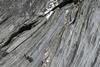
Modelling sedimentary rocks
Students use syringes to make samples of sedimentary rock from sand both with and without cementing agents.
-
 Resource
Weathering and erosion
Examine the ways in which water can weather rocks, by solution and by freeze-thaw.
-
 Resource
Hand warmers
Use these student activities and teacher guide to investigate reusable and disposable hand warmers. You will compare reusable variants made with sodium acetate vs disposable handwarmers. You can also try making your own hand warmers. These activities may work well as a project on class topics like ‘winter’ or ‘body ...
-
 Resource
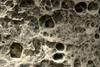
Limestone weathering
This activity is designed for students aged 11-14. It can be used to reinforce work on the reactions of carbonates with acids as well as the chemical weathering of rock.
-
 Resource
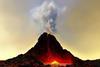
Making a volcano
Simulate ways in which both extrusive and intrusive igneous rocks may form
-
 Resource
Wood conservation - the Mary Rose
The Mary Rose is a wooden Tudor warship that sank off Portsmouth in 1545. While on the sea bed, most of her hull became covered in silt, which effectively sealed it and the artefacts it contained in anaerobic (air-free) conditions and preserved them from decay.
-

-
 Resource
Nitration of methyl benzoate
Synthesise and recrystallize a sample of methyl 3-nitrobenzoate.
-
 Resource
Investigating the reaction between manganate(VII) and ethanedioate ions
Use a continuous monitoring method to investigate the redox reaction between potassium manganate(VII) and ethanedioate ions.
-
 Resource
On This Day - Nov 07 : Raman was born
He was awarded the Nobel Prize in Physics in 1930 for his work on the scattering of light and the discovery of the Raman effect. This effect is the change in the wavelength of light when a light beam is deflected by molecules. Raman spectroscopy has since become a key tool for chemical characterisation.
-
 Resource
Chemistry in your cupboard
Learn about a range of real life contexts for these chemical ideas through written material, and questions to encourage learning and test understanding
-
 Resource
Chemistry in your cupboard: Veet
Link the post-16 topics of amino acids and proteins, bonding, reaction rates and equilibria and Le Chateliers principle to the topic of hair removal. Learn about a range of real life contexts for these chemical ideas through written material, and questions to encourage learning and test understanding.
-
 Resource
Chemistry in your cupboard: Vanish
Link the topics of group 7 elements, amino acids, proteins, fats and carbohydrates and bonding to the topic of stain removal. Learn about a range of real life contexts for these chemical ideas through written material, and questions to encourage learning and test understanding.
-
 Resource
Chemistry in your cupboard: Cillit Bang
Link the post-16 topics of group 1 elements, detergents (surfactants), solvents and acids to the topic of cleaning products.
-
 Resource
Chemistry in your cupboard: Calgon
Link the post-16 topics of group 2 elements, acids and bases and polymerisation to the topic of hardness of water.
-
 Resource
Chemistry in your cupboard: Harpic
Link the post-16 topics of group bonding, acid rain, equilibria and Le Chateliers principle and strong and weak acids to the topic of removing limescale. Learn about a range of real life contexts for these chemical ideas through written material, and questions to encourage learning and test understanding.
-
 Resource
Chemistry in your cupboard: Finish
Link the topics of rates of reaction, group 1, 2 and 7 elements, proteins, fats and carbohydrates and acids and bases to the topic of dishwasher cleaning. Learn about a range of real life contexts for these chemical ideas through written material, and questions to encourage learning and test understanding.
-
 Resource
Synthesis Explorer
Plan synthetic routes and study key organic chemistry reactions interactively.
-
 Resource
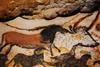
Analysis of cave paintings
In this practical, student gain an understanding of how cave painters may have used the natural rock formation to paint the animals and scenes onto them and how later painters have continued with this tradition.