



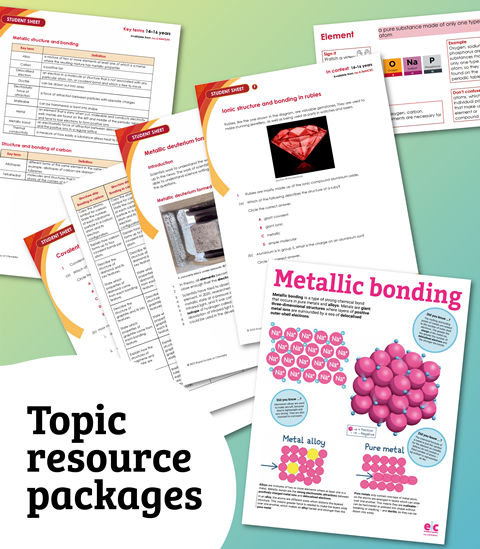









Encourage learners to think about how graphical representations of solubility link to macroscopic observations and symbolic understanding
Developing understanding is a series of resources that encourages learners to connect their thinking at the macroscopic, sub-microscopic and symbolic levels.
-
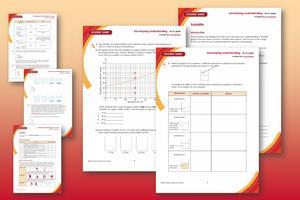
Download this
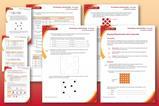
A ramped worksheet to help learners develop their mental models of solubility. With icons to indicate the conceptual level/s of each question.
View and download more Developing understanding worksheets
Learning objectives
- Recognise that a substance may be soluble in one solvent but insoluble in another.
- Identify whether a substance is soluble or insoluble from macroscopic observations.
- Use solubility to explain macroscopic observations.
- Recognise that the solubility of a substance can change with temperature.
- Interpret different points on a temperature–solubility graph.
- Connect points on a temperature-solubility graph with macroscopic observations.
How to use this resource
This resource aims to develop learners’ understanding of solubility. The questions encourage learners to think about how graphical representations of solubility link to macroscopic observations and symbolic understanding. As a result, learners should develop more secure mental models to support their thinking about this topic.
- When to use? Use after initial teaching or discussion of this topic to develop ideas further. You can also use as a revision activity.
- Group size? Suitable for independent work either in class or at home. Or use the questions for group or class discussions.
- How long? 15–30 mins
Johnstone’s triangle
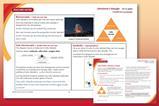
Johnstone’s triangle is a model of the three different conceptual levels in chemistry: macroscopic, sub-microscopic and symbolic. You can use Johnstone’s triangle to build a secure understanding of chemical ideas for your learners.
Further reading
Read more about how to use Johnstone’s triangle in your teaching with these articles:
- Develop deeper understanding with models
- Improve students’ understanding with Johnstone’s triangle
- Practical ideas for using Johnstone’s triangle
Norman Reid’s book The Johnstone triangle: the key to understanding chemistry provides an more in-depth overview; the first chapter is available to read online.
Support
This worksheet is ramped so that the earlier questions are more accessible. The activity becomes more challenging in the later questions. You can give extra explanations for the more challenging questions. If completing as an in-class activity it is best to pause and check understanding at intervals, as often one question builds on the previous one.
It is useful for learners to observe macroscopic properties first-hand. You could circulate examples of substances in the classroom, run a class practical of a chemical reaction or show a teacher demonstration of properties.
Additional support may be needed for any learners still lacking in confidence in the required symbolic representation, for example by sharing and explaining a diagram or a simulation that can show movement of the particles.
Answers and guidance
There are five multi-part questions in the student worksheet. Answers can be found in the teacher notes.
Question one supports learners to recognise that a solvent does not have to be water and that a substance may be insoluble in one liquid but soluble in another (macroscopic understanding). This question assumes that learners are already familiar with the terms soluble and insoluble.
Question two supports learners to recognise observations (macroscopic understanding) that show that a substance is soluble (formation of a clear solution) or insoluble (either a lump of undissolved solid or a cloudy mixture formed by a powder that does not dissolve).
If learners need support explain that:
- If the substance is soluble in the solvent then it will seem to disappear and the solution will remain clear i.e. you can see through it. The solution may be colourless or coloured.
- If the substance is insoluble, then it will either sink to the bottom or make the solution cloudy when first added.
Question 3 supports learners explain observations (macroscopic understanding) in terms of the solubility of a compound.
Question 4 supports further understanding of the graphical representation (a form of symbolic understanding) of solubility of a compound at different temperatures. It then develops learners’ ability to connect this with observations (macroscopic understanding).
The first part of question 5 supports learners to explain observations (macroscopic understanding) in terms of the change in solubility of a compound at different temperatures. The second part of the question supports learners to interpret the meaning of a graphical representation (a form of symbolic understanding) of solubility of a compound at different temperatures. This question assumes some familiarity with the interpretation of a graph. Learners lacking confidence with this may require additional scaffolding and support.
Downloads
Solubility developing understanding student sheet
Handout | PDF, Size 0.54 mbSolubility developing understanding teacher notes
Handout | PDF, Size 0.24 mbSolubility developing understanding student sheet
Editable handout | Word, Size 0.82 mbSolubility developing understanding teacher notes
Editable handout | Word, Size 0.56 mb
- Prepare(1)
 CPD article
How to teach solubility at 14–16
Concentrate learners’ minds on the key aspects of solutions
- Deliver(3)
currently reading
 Resource
Solubility | Developing understanding | 14–16 years
Deepen your learners’ understanding of solubility graphs and how these connect to real-life observations for more secure mental models
 Resource
Solubility | Structure strip | 14–16 years
Use scaffolded prompts to support learners to write about solubility with confidence
 Class experiment
The effect of temperature on solubility
Hot or cold, which water is better for soluble substances? Explore your finding from this practical into the effect of temperature on solubility. Includes kit list and safety instructions.
- Literacy(2)
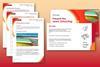 Resource
Elements, compounds and mixtures | Reading comprehension | 14–16
Practise reading comprehension skills with a science research article about a new technique for extracting lithium
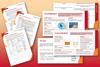 Resource
Elements, compounds and mixtures | Key terms support | 14–16
Key terms list, accessible glossary, Frayer models and unscrambling definitions provide comprehensive language support for this topic
- Assess(3)
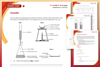 Resource
Solubility and preparing sodium chloride | In context | 14–16
Put solubility into context with questions based on preparing sodium chloride through titration using hydrochloric acid and sodium hydroxide solution.
 Resource
Solubility | Knowledge check | 14–16
Assess learning of solubility with a higher and foundation worksheet
 Resource
Solubility | Review my learning worksheets | 14–16 years
Identify learning gaps and misconceptions with this set of worksheets offering three levels of support
- Enrich(3)
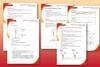 Demonstration
The properties of hydrogen chloride
Use this demonstration and practical to investigate properties of hydrogen chloride, such as its solubility in water.
 News
NewsResearchers crack two century challenge to form calcium bicarbonate crystals
Give students a real example of how solubility, ionic bonding and reaction conditions affect salt formation
 Resource
The solubility of aspirin | 16–18 years
This activity is a useful vehicle for reinforcing ideas relating to strong and weak acids, basicity and elementary chemical calculations. Includes kit list and safety instructions.


No comments yet