








All Maths skills articles – Page 3
-
 CPD article
Teaching rates of reaction post-16
Ideas and activities to help students explore reaction dynamics and mechanisms
-
 Resource
Introducing moles numeracy worksheet | 14–16 years
Use the context of cooking to get students more comfortable with concepts such as balanced equations, ratios and reagents
-
 Ideas
Stoichiometry and moles: how to explain it?
Use cooking as a fun, accessible introduction to why and how we use balanced equations
-
 Feature
How ice cream is made
For a simple combination of milk, cream, sugar and flavourings, there is a lot of science involved in ice cream manufacture
-
 News
What is difficult about concentration?
Fresh insight offers tips for teaching the mathematics of moles, volume and molarity
-
 Poster
Real-life contexts for thermodynamics
Use this infographic with your 16–18 students and get them working with thermochemistry, intermolecular forces and free energy
-
 CPD article
Teaching acids and bases post-16
Try these tips, ideas and activities to help you teach this topic
-
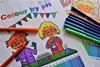 Resource
Colour by pH
Introduce learners to the pH scale and the Universal Indicator chart by using these colour by number worksheets.
-
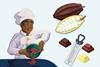 Poster
The science of melting chocolate
Use this infographic with your 11–14 students to develop their knowledge of changes of state and their graphing skills
-
 Ideas
Back to basics with spectrophotometry
How to demonstrate the Beer–Lambert law using your smartphone as a light meter
-
 Resource
Smartphone spectroscopy: Beer–Lambert law
Use your smartphone to measure changes in concentration across different concentrations of squash at home or in the classroom. Use your results to predict the concentration of an unknown dilution of squash.
-
 Resource
Runaway reactions
Ask your 16–18 students to take a closer look at ammonium nitrate and enthalpy
-
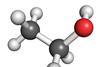 Resource
Reactions of alkenes and alcohols – organic chemistry worksheets | 14–16
A student worksheet for foundation and higher level. Assess learning with questions about the reactions of alkenes and alcohols
-
 Resource
Burning hydrocarbons – organic chemistry worksheets | 14–16
Student worksheets at foundation and higher level. Assess learning with questions exploring the topic of burning hydrocarbons.
-
 Q&A
Classroom questions: fears, units and chat
Experts answer questions about using units in calculations and encouraging classroom chats from trainee, newly qualified and early career teachers
-
 Resource
Condensation polymerisation – organic chemistry worksheets | 14–16
Student worksheets at higher level. Apply knowledge in context and assess learning with questions exploring condensation polymerisation, including polyesters and the nylon rope trick experiment.
-
 Resource
Natural polymers – organic chemistry worksheets | 14–16
Student worksheets at foundation and higher level. Apply knowledge in context and assess learning with questions exploring natural polymers, including starch and amino acids.
-
 Resource
Carboxylic acids – organic chemistry worksheets | 14–16
Student worksheets at foundation and higher level. Apply knowledge in context and assess learning with questions exploring the topic of carboxylic acids, including flavourings for ice cream.
-
 Resource
Addition polymerisation – organic chemistry worksheets | 14–16
Student worksheets at foundation and higher level. Apply knowledge in context and assess learning with questions exploring addition polymerisation, including the formation and properties of addition polymers and their use in sports clothing and equipment.
-
 Resource
Alcohols – organic chemistry worksheets | 14–16
Student worksheets at foundation and higher level. Apply knowledge in context and assess learning with questions exploring alcohols, including burning alcohols in cooking and as fuels.