







All Organic chemistry articles – Page 8
-
 Resource
Paracetamol book
This book consists of seven freestanding activities that can be used in a wide range of teaching and learning situations in both academic and vocational courses.
-
 Resource
Organic chemists: contributing to food production | 16–18 years
This scientific case-study highlights the importance of organic synthesis in more efficient food production.
-
 Resource
Aspirin book
This book contains eight free-standing activities that can be used singly or as a coherent package in a wide range of teaching and learning situations for both academic and vocational courses.
-
 Resource
Chemistry in your cupboard: Nurofen
Link the post-16 topics of bonding and solubility, isomerisation and reactions of organic functional groups to the topic of analgesics. Learn about a range of real life contexts for these chemical ideas through written material, and questions to encourage learning and test understanding.
-
 Resource
Chemistry in your cupboard: Dettol
Link the post-16 topics of phenols, bonding and acids and bases to the topic of antiseptics.
-
 Resource
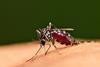
Molecules against malaria
This medicinal chemistry case study is designed to introduce students to the development of antimalarial 4-aminoquinolines and the early stages of drug discovery and development. It focuses on antimalarial 4-aminoquinolines (4-AQs) and involves an introduction to malaria, its causes, societal impact and the need for new drugs. It then presents ...
-
 News
NewsInorganic polystyrene gives old material a new backbone
New catalytic route opens the door to polymers made from boron and nitrogen
-
 Resource
On This Day – Jul 23 : Vladimir Prelog was born
He was the first person to synthesize the unusually symmetrical hydrocarbon adamantane, whose derivatives are routinely used for medical applications. He shared the 1975 Nobel Prize in Chemistry for “his research into stereochemistry of organic molecules and reactions”.
-
 Resource
Chemical misconceptions II: Reaction mechanisms
Reaction mechanisms are an important part of understanding chemical interactions. This activity helps learners to identify them.
-
 Misconceptions
Chemical misconceptions I: Chemical reactions
Explore chemical reactions, how to describe them, form word equations, and why they occur.
-
 Resource
Food and drink chemistry infographics
Use this collection of visually stimulating and informative infographics about the chemistry of food and drink as a valuable addition to your science classroom. Find the answers to questions such as ‘Is the galaxy raspberry flavoured?’; ‘Why shouldn’t I drink grapefruit juice if I’m taking medication?’ and, ‘What are the ...
-
 Resource
Titration screen experiment
Give students the opportunity to conduct their own titration experiment on a computer or tablet. This resource also includes a redox titration experiment.
-

-

-
 Feature
Carbon dioxide gets stoned
Locking Earth’s excess carbon dioxide away by turning it into rock
-

-
 Resource
Designing an organic synthesis
View a summary of how to approach the synthesis of an organic compound, focussing on the construction of key bonds. Follow an example multistep synthesis using standard organic transformations, answering questions along the way. This page is suitable for students beginning organic chemistry. Designing an organic synthesis This page is ...
-
 Soundbite
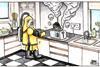
Is there a dark secret in your crispy potatoes?
Acrylamide may not be quite as bad as it seems
-
 Resource
Colourful food: kitchen science podcasts
Introduce your students to colours in food with this short podcast.
-
 News
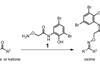
NewsDibrominated tag helps identify new natural products
New substance allows researchers to find new aldehyde- and ketone-containing natural products