








All Resource articles – Page 11
-
 Resource
Structure of the atom | Structure strip | 14–16 years
Support learners to recall and write about the properties of subatomic particles and the structure of an atom
-
 Resource
Chromatography challenge | 16–18 years
Explore analytical techniques and their applications with a chromatography investigation and research activity
-
Resource
Bondio ïonig | Stribed strwythur | 14–16 oed
Deall y modelau a’r diagramau a ddefnyddir i gynrychioli bondio ïonig a’u cyfyngiadau, gyda’r gweithgaredd ysgrifennu hwn sydd wedi’i sgaffaldio
-
 Resource
Bondio cofalent | Stribed strwythur | 14–16 oed
Deall diagramau bondio cofalent a’u cyfyngiadau, gyda’r gweithgaredd ysgrifennu hwn sydd wedi’i sgaffaldio
-
 Resource
Metallic bonding | Structure strip | 14–16 years
Describe the metallic bonding model and explain how this leads to particular properties in metals, with this scaffolded writing activity
-
 Resource
Bondio metelig | Stribed strwythur | 14–16 oed
Disgrifiwch y model bondio metelig ac eglurwch sut mae hyn yn arwain at briodweddau penodol mewn metelau, gyda’r gweithgaredd ysgrifennu hwn sydd wedi’i sgaffaldio
-
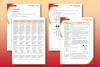 Resource
Covalent bonding | Structure strip | 14–16 years
Understand covalent bonding diagrams and their limitations, with this scaffolded writing activity
-
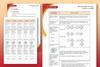 Resource
Ionic bonding | Structure strip | 14–16 years
Understand the models and diagrams used to represent ionic bonding and their limitations, with this scaffolded writing activity
-
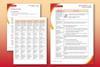 Resource
Allotropes of carbon | Structure strip | 14–16 years
Support learners to retrieve information on the structure and bonding in different forms of carbon, with this scaffolded writing activity
-
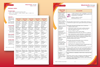 Resource
Alotropau carbon | Stribed strwythur | 14–16 oed
Cefnogwch y dysgwyr i adalw gwybodaeth am yr adeiledd a bondio mewn gwahanol fathau o garbon gyda’r gweithgaredd ysgrifennu hwn sydd wedi’i sgaffaldio
-
 Resource
Paracetamol book | Presentation activity
Learners put their audio and visual skills to use, on the topic of paracetamol, with this guide on creating a compelling presentation
-
 Resource
Paracetamol book | The formation of an amide
Explore the formation of an amide with this practical experiment suitable for learners ages 16-18
-
 Resource
Paracetamol book | The reduction of a nitro group to an amine
Nitro group reduction into an amine is covered in this practical class experiment.
-
 Resource
Paracetamol book | The quantitative analysis of various formulations of paracetamol
An experiment to show learners to analyse several different formulations of paracetamol and create and quantitative judgment of them.
-
 Resource
Paracetamol book | Background information
Explore the key elements of paracetamol, and lay a strong foundation of background information.
-
 Resource
Paracetamol book | The extraction and purification of paracetamol from tablets
How pure is paracetamol? This practical lets learners distil tablets and answer that very question
-
 Resource
Paracetamol book | The preparation of paracetamol
The first of three steps, in practical experiments, that show learners how to prepare paracetamol
-
 Resource
Paracetamol book | Using thin-layer chromatography to investigate the reactions
In this activity you investigate the purity and identity of your laboratory prepared samples of nitrophenol or paracetamol using thin-layer chromatography
-
 Resource
Life cycle assessment: shopping bags | 14–16 years
Slides, scaffolded worksheets and teacher notes to introduce learners to life cycle assessments using a real-world example
-
 Resource
Patterns in formulas of compounds
Use this short written activity to show how the periodic table can predict patterns in the formulas of compounds