








All Resource articles – Page 18
-
 Resource
Tricky tracks: observation and inference in science | 11–14 years
Presentation, worksheet and lesson plan to help learners understand the difference between observation and inference as you build their understanding of the scientific process
-
 Resource
Evaluating experiments worksheet | 14–16 years
Improve your learners’ evaluation skills by breaking down the experimental process
-
 Resource
Practical skills tracking | 16–18 years
Use these editable tools to help learners develop their practical skills using the Common Practical Assessment Criteria (CPAC)
-
 Resource
Practical planning: spot the mistakes | 14–16 years
Use these exam-style questions to check your learners’ understanding of experimental skills and strategies
-
 Resource
Using multiple models in science | 14–16 years
Interpret and evaluate multiple models of a molecule of hydrogen to develop understanding and discuss limitations of models in science
-
 Resource
Toxic socks: nanotechnology, ethics and society | 11–14 years
Use the example of nanotechnology in socks to introduce ethics in science with this structured practice debate
-
 Resource
Student risk assessment: preparing a salt | 14–16 years
Two worksheets to guide learners in recognizing hazards, evaluating risks and identifying control measures
-
 Resource
Decomposition reactions | 11–14 years
Differentiated worksheets guide learners to consider word equations, symbol equations and conservation of mass linked to simple decomposition reactions
-
 Resource
Structure and bonding: exploding exam questions | 14–16 years
Present and practise a technique to help learners understand the language used in extended-reponse questions and improve their answers
-
 Resource
Adeiledd a bondio: cwestiynau arholiad ffrwydrol | 14–16 oed
Cyflwynwch ac ymarfer techneg i helpu’r dysgwyr i ddeall yr iaith a ddefnyddir mewn cwestiynau ateb estynedig a gwella eu hatebion
-
 Resource
STEM careers and skills activities
Introduce primary learners to STEM careers and encourage them to explore their own skills. Includes a game, colouring poster, fact files and teaching notes.
-
 Resource
Lithium-ion cells worksheet | 16–18 years
Review your learners’ understanding of electrochemistry and its applications
-
 Resource
Spot the entropy errors worksheet | 16–18 years
Develop your learners’ metacognitive skills using thermodynamics questions and calculations
-
 Resource
Top of the Bench past papers
Use these past papers and answers to practise working through real questions from the Top of the Bench competition.
-
 Resource
Displacement reaction snap | 11–14 years
Consolidate learning about simple displacement reactions with this game, followed by a formative assessment activity for the whole class
-
 Resource
Snap adwaith dadleoli | 11–14 oed
Gallwch atgyfnerthu’r hyn a ddysgwyd am adweithiau dadleoli syml gyda’r gêm hon, ac yna gweithgaredd asesu ffurfiannol ar gyfer y dosbarth cyfan
-
 Resource
Hanukkah doughnuts: interpret practical instructions | 11–14 years
Worksheet on interpreting practical methods using a recipe format, a scientific method and integrated instructions
-
 Resource
Born–Haber interactive toolkit
Learner’s collaborate to build four different Born–Haber cycles with a large-scale toolkit of arrow cards followed by a worksheet of calculation questions using Hess’s law
-
 Resource
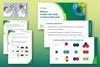
Atoms, molecules and compounds quiz | 11–14 years
Use this quiz to check understanding of atoms, molecules, elements and compounds
-
 Resource
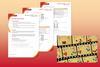
Electrolysis diagrams | 14–16 years
Worksheet to help address a common area for misconceptions in electrolysis, identifying the cathode and anode. Includes multiple-choice questions, diagrams to label and a variety of examples