








All Resource articles
View all stories of the same content type.
-
 Resource
Introducing chemical change | Key terms support | 11–14
Language support pack for Introducing chemical change, with key terms list, accessible glossary, Frayer models and unscrambling definitions
-
 Resource
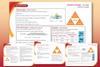
Moles of gold | Johnstone’s triangle worksheets | 14–16 years
Connect macroscopic, sub-microscopic and symbolic understanding of calculations involving moles and mass with Johnstone’s triangle
-
 Resource
Moles and mass | Developing understanding | 14–16 years
Develop understanding of the relationship between the mass of one mole, the number of moles and the mass of a substance
-
 Resource
Quantitative chemistry | Key terms support | 14–16
Language support pack for quantitative chemistry, with key terms list, accessible glossary, Frayer models and unscrambling definitions
-
 Resource
Reactant and product substances | Developing understanding | 11–14
Use these worksheets to secure and deepen your learners’ understanding of reactants and products in chemical changes
-
 Resource
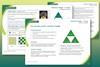
Iron and sulfur reaction | Johnstone’s triangle | 11–14
Develop your learners’ understanding of reactants and products at different conceptual levels, using an iron and sulfur reaction as an example
-
 Resource
C, O and Co | Johnstone’s triangle | 11–14 years
Develop your learners’ understanding of symbols and formulas at different conceptual levels by comparing the symbolic representations of carbon monoxide and cobalt
-
 Resource
Symbols and formulas | Developing understanding | 11–14 years
Develop your learners’ understanding of what is represented by symbols and chemical formulas
-
 Resource
Reactants and products | Structure strip | 11–14 years
Use scaffolded prompts to support learners to write about reactants and products
-
 Resource
Conservation of mass | Structure strip | 11–14 years
Use scaffolded prompts to support learners to write about conservation of mass
-
 Resource
Representing chemical reactions | Structure strip | 11–14 years
Use scaffolded prompts to support learners to write about representing chemical reactions
-
 Resource
Relative mass | Structure strip | 14–16 years
Support learners to demonstrate their understanding of relative mass, using scaffolded writing prompts
-
 Resource
Reacting masses and gas volumes | Structure strip | 14–16 years
Use scaffolded prompts to support learners to write about reacting masses and gas volumes
-
 Resource
Interpreting chemical equations | Developing understanding | 14–16 years
Deepen learners’ understanding of interpreting chemical equations by exploring the topic at different conceptual levels
-
 Resource
Balancing chemical equations using hydrogen and oxygen | Johnstone’s triangle worksheets | 14–16 years
Introduce Johnstone’s triangle to help learners gain a deeper understanding of balancing chemical equations
-
 Resource
Relative atomic mass of boron | Johnstone’s triangle worksheets | 14–16 years
Use Johnstone’s triangle to help learners think about the relative atomic mass of boron
-
 Resource
Concentration and mass | Developing understanding | 14–16 years
Encourage learners to deepen their understanding of concentration and mass from the macroscopic to sub-microscopic level
-
 Resource
Concentration of sodium hydroxide | Johnstone’s triangle worksheets | 14–16 years
Think about sodium hydroxide (NaOH) solution at a macroscopic, sub-microscopic and symbolic level
-
 Resource
Reacting ratios: masses | Developing understanding | 14–16 years
Develop learners’ understanding of the ratio of the very large number of atoms or molecules in balanced chemical equations
-
 Resource
Extracting tin from tin oxide | Johnstone’s triangle worksheets | 14–16 years
Introduce calculations using reacting masses in the context of extracting tin from tin oxide