







All Cross-curriculum articles – Page 3
-
 Resource
Olympic composites: sports equipment and composite materials
A composite is a mix of two or more materials which often have very different properties. Find out about composites used in sport equipment material.
-
 Resource
Olympic composites (primary level)
Find out what composites are made up of and why they are so important sporting equipment for the Olympics.
-
 Resource
Wind power challenge
A link to Practical Action’s wind power challenge and its related resources, where students are tasked with designing and testing a wind power machine that is cable of lifting weighted objects,
-
 Resource
Water! Water!
A resource pack including a student worksheet, teachers’ notes and four presentations looking at one of the most vital substances on planet Earth - water.
-
 Resource
The squashed tomato challenge
Students design, build and test a method of transporting tomatoes
-
 Resource
Small is... challenge
A link to Practical Action’s ‘small is… challenge’ and its related resources, where students are tasked with analysing technology from the last hundred years, and to invent a product that could help achieve a sustainable future.
-
 Resource
Plastics challenge
Links to Practical Action’s plastics challenge, where students develop products from recycled objects, as a possible way of tackling environmental problems caused by plastic waste.
-
 Resource
Power for the world
A link to Practical Action’s power for the world activity and its related resources, where students are tasked with looking at renewable energy solutions, and designing and building their own wind turbines.
-
 Resource
Floating garden challenge
Design and build a model structure with Practical Action’s floating garden challenge
-
 Resource
Beat the flood challenge
Links to Practical Action’s beat the flood challenge, including the teacher and student materials, beat the flood poster, competition winners and schools’ experiences of the challenge. Video: Beat the flood
-
 Resource
Wood conservation - the Mary Rose
The Mary Rose is a wooden Tudor warship that sank off Portsmouth in 1545. While on the sea bed, most of her hull became covered in silt, which effectively sealed it and the artefacts it contained in anaerobic (air-free) conditions and preserved them from decay.
-
 Resource
Analysis of cave paintings
In this practical, student gain an understanding of how cave painters may have used the natural rock formation to paint the animals and scenes onto them and how later painters have continued with this tradition.
-
 Resource
The language of mathematics in science - guides from the ASE
These teacher guides from the Association for Science Education are designed to help you understand important terms and techniques related to the use of mathematics in the science curriculum for pupils aged 11–16, and then give you the confidence to apply those practices and principles in the classroom.
-
 Resource
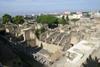
Conservation in Herculaneum
Herculeaum is a special case of art in an archaeological setting. So how is it conserved?
-
 Resource
Benham top
In this experiment, students record what is seen when a Benham top spins at different speeds, comparing their perceptions with those of group members.
-
 Resource
Making a water magnifier
In this practical, students experiment with magnification by placing water drops on top of lettering.
-
 Resource
The emergence of new techniques and pigments
The emergence of new techniques and pigments within Greek art
-
 Resource
Ancient Greek art
The Classical Greek period heralded an age in which thought and art flourished.
-
 Resource
Measurement, accuracy and precision
Activities for students which help them discover the importance and difficulties of accurate experimentation
-
 Resource
Talk for primary science
Explore ways you can encourage constructive conversations and lead children to investigative activities.