








All Cross-curriculum articles – Page 6
-
 Resource
Making marbled paper
In this practical, students create a marble effect on paper, using their knowledge of mixtures and hydrophobic solutions to explain the phenomena. Also, students use their evaluating skills to determine which method produces the best result.
-
 Resource
Ancient inks
In this practical, students use methods which have been used for centuries to produce inks.
-
 Resource
Water drop art
In this practical, students observe and report what happens when water is placed on waxed paper, and a splint or toothpick is positioned close to the droplets.
-
 Resource
Making and using blueprint paper
Blueprints use the cyanotype process invented by the astronomer John Herschel in 1842. In this experiment you will carry out an experiment to produce blueprint paper and produce an image or diagram using the blueprint paper.
-
 Resource
Restoration of Minoan paintings: Imitation or reproduction?
Minoan art tells of a people who were keen observers of their world, in touch with the environment and enjoying the world they lived in.
-
 Resource
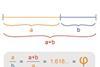
Greek art theory influences future art
Here we look at how the influences on Ancient Greek art, including the importance, and what is meant by, the Goldern Ratio.
-
 Resource
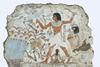
Egyptian blue
The Egyptians sought a permanent blue pigment to depict their royalty and gods with the necessary reverence. Here we look at how the Egyptian achieved a blue pigment that didn’t degrade over time.
-
 Resource
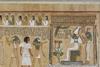
Principles of Egyptian art
Understanding Egyptian art lies in appreciating what it was created for. Ancient Egyptian art must be viewed from the standpoint of the ancient Egyptians not from our viewpoint. Here we explore the basis of Egyptian art.
-
 Resource
Conservation of Egyptian art
The ethical questions of whether ancient works of art should be be conservered or restored are investigated with this resource.
-
 Resource
Egyptian myths
The Egyptians developed a world view in which events and conditions were attributed to the actions of multiple, related gods and goddesses. Here are some of those stories.
-
 Resource
Egyptian materials and pigments
Ancient Egyptian artists are known for developing a wider range of materials for their art.This resource looks at the pigments and materials the Egyptians used to create their art.
-
 Resource
Egyptian art
To understand and appreciate Egyptian art one must look at the beginnings of art in Egypt and how it developed, for in that development lay the roots of many ideas and techniques. This resources explores this development.
-
 Resource
Defining the age of a rock or cave painting
Discover how it is possible to date rock and cave paintings, using science.
-

-

-
 Resource
Cave art history
Cave paintings and drawings were the first uses of art in prehistoric times. Here we look at the artistic interpretations of the world by Homo sapiens.
-
 Resource
Journal articles made easy: A modern pigment
This article discusses the properties of a paint pigment, manganese blue, and defines a method to map the presence of the pigment in works of art. It will help you understand the research the journal article is based on, and how to read and understand journal articles. The research article ...
-
 Resource
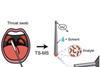
Journal articles made easy: Detect strep throat
This article looks at detecting strep throat bacterium using touch spray mass spectrometry. It will help you understand the research the journal article is based on, and how to read and understand journal articles. The research article was originally published in our Analyst journal. Strep throat spotted in secondsDetection of ...
-
 Class experiment
Making solder as an alloy of tin and lead
Try this practical to make solder by heating together the metals tin and lead before investigating the alloy’s properties. Includes kit list and safety instructions.
-
 Resource
Interviews and interviewing
This book can be used to address aspects of communication skills, or can be run as a complete module. This section focuses on interview skills.