










In this experiment, learners measure the mass of magnesium and heat it in a crucible. By recording the change in mass they can discover the formula of magnesium oxide
-
Download this
Download the scaffolded and unscaffolded student worksheets and teacher guidance (including answers) as MS Word and pdf and the presentation slides as MS PowerPoint and pdf.
Discover more resources from the Nuffield practical collection
The practical activity takes around 30–45 minutes. If necessary, omit the final step of heating to constant mass to shorten the practical.
Learning objectives
- Safely investigate burning magnesium to produce magnesium oxide.
- Correctly record the change in mass.
- Explain why the mass changes.
- Use data to calculate the relative formula mass of magnesium oxide.
Success criteria
- Safely heat the crucible with the lid on to avoid making any eye contact with the burning magnesium (LO1).
- Correctly use the tongs to safely transfer the crucible and lid (this may need pratice whilst cold) (LO1).
- Use the mass balance correctly to record mass by using the tare function correctly (LO2).
- Explain mass change by linking to knowledge of conservation of mass and balanced equations (LO3).
- Link knowledge of conservation of mass with moles to caclulate the relative formula mass (LO4).
Scaffolding
Two versions of the worksheet are available: scaffolded and unscaffolded. The scaffolded sheet offers more support to allow learners to access the questions. The answers to the worksheets are at the end of the teacher notes.
Integrated instructions are available in the presentation slides.
Video support and linked resources
This method is included in our Conservation of mass video, along with supporting resources including intended outcomes, pause-and-think questions, a follow-up worksheet and a structure strip.
Technician notes
Read our standard health and safety guidance and carry out a risk assessment before running any live practical.
Equipment
Apparatus
- Safety glasses
- Access to a balance (2 decimal places)
Per group of learners:
- Crucible with lid
- Tongs
- Pipe clay triangle
- Bunsen burner
- Tripod
- Heat resistant mat
- Emery paper (optional)
Chemicals
- Magnesium ribbon, pre-cut into 5–10 cm lengths. DANGER: flammable solid. Fresh, clean magnesium is best for this experiment. If the magnesium is tarnished then learners will need emery or sandpaper to clean it.
Health and safety
- Wear eye protection throughout.
- Magnesium ribbon, Mg(s) DANGER: flammable solid. See CLEAPSS Hazcard HC059a, refer to SSERC, or contact your local safety advisory body.
- Take steps to precent theft of magnesium ribbon. Reels of magnesium ribbon should not be left out in the laboratory. It is good practice to have a limited number of pre-cut lengths and to hand these out to learners as needed.
- Magnesium burns with a bright white light. NEVER look directly at magnesium when it is burning. Note: viewing through fingers, sunglasses, smoked glass, blue glass or polaroid filters is no longer recommended.
- Learners should all be standing. Learners with long hair should tie it back.
- Ask learners to practice lifting the lid on and off the crucible and the crucible off the pipe clay triangle before they start. This also checks that all the tongs are functioning correctly.
- A significant hazard in this experiment is the hot apparatus. Warn learners that it will take some time to cool down.
Disposal
- Scrap the magnesium oxide left in the crucible using a spatula and dispose of as general waste.
- Crucibles can be soaked for a few hours or overnight in 0.5 mol dm-3 hydrochloric acid solution. If any solid remains at the bottom, rinse thoroughly using distilled water.
- Porcelain crucibles tend to crack easily if re-used, consider using staless steel crucibles instead or an alternative method from CLEAPSS uses bottle caps.
Method
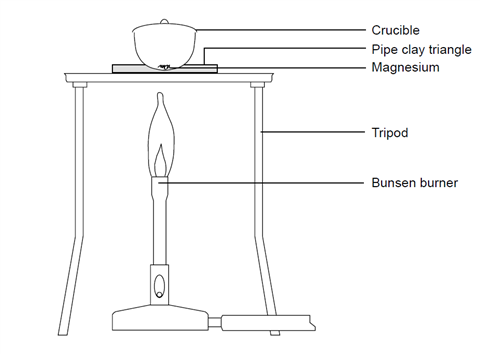
- Take a piece of magnesium about 10–15 cm long. If it is looking tarnished or black then clean it using the emery paper. Twist it into a loose coil.
- Record the mass of the crucible with the lid (mass 1) and then the magnesium inside the crucible with the lid (mass 2).
- Set up the Bunsen burner on the heat resistant mat with the tripod. Place the pipe clay triangle over the tripod to make a six-pointed star shape, making sure that it is secure. Place the crucible containing the magnesium in the pipe clay triangle and put the lid on.
- Light the Bunsen burner and begin to heat the crucible. It is best to start with a gentle blue flame, but you will need to use a roaring flame (with the air hole fully open) to get the reaction to go.
- Once the crucible is hot, gently lift the lid with the tongs a little to allow some oxygen to get in. You may see the magnesium begin to flare up. If the lid is lifted for too long then the magnesium oxide product will begin to escape. Don’t let this happen.
- Keep heating and lifting the lid until you see no further reaction.
- Turn off the Bunsen burner and allow the apparatus to cool.
- Re-record the mass of the crucible with lid containing the product (mass 3).
- Heat the crucible again for a couple of minutes and once again allow to cool. Repeat this step until the mass readings are consistent. This is known as heating to constant mass.
Teaching notes
Learners should have recorded the following masses:
- mass 1 = crucible + lid
- mass 2 = crucible + lid + magnesium
- mass 3 = crucible + lid + product
This should allow them to calculate the mass of the mass of the magnesium (mass 2 – mass 1) and the mass of the product (mass 3 – mass 1). They could also calculate the increase in mass (mass 3 – mass 2), which corresponds to the mass of oxygen.
The equation is:
- Magnesium + oxygen → magnesium oxide
- 2Mg + O2 → 2MgO
Learners sometimes get unconvincing results to this experiment. It is worth evaluating what they have done as there are several reasons why their results may be disappointing:
- The magnesium oxide product escapes as they lift the lid.
- Not all the magnesium has reacted (the product will still look a bit grey rather than white).
- They have prodded the product with their splint so not all of it got weighed (more common than you might expect).
- They did not tare the balance correctly when measuring the mass.
- The magnesium was coiled too tightly so that not all of it reacted.
Finding the formula of magnesium oxide
Method one
- To find the formula of magnesium oxide, students will need the mass of the magnesium and the mass of the oxygen. They will also require the relative atomic masses. Magnesium is 24 and oxygen is 16.
- They should divide mass by the atomic mass for each element. The gives the number of moles of each.
- Having done this for both elements, they should find the ratio between the two by dividing them both by the smallest number.
- The ratio should be close to 1:1 as the formula of magnesium oxide is MgO.
- Example calculation:
- Mass magnesium = 2.39 g
- Mass magnesium oxide = 3.78 g
- So mass oxygen = 1.39 g
- Number moles Mg = 2.39/24 = 0.0995
- Number moles O = 1.39/16 = 0.0868
- Divide by the smallest to give the ratio aproximately 1 Mg : 1 O
- This would suggest a formula of MgO, which is the correct formula
Method two
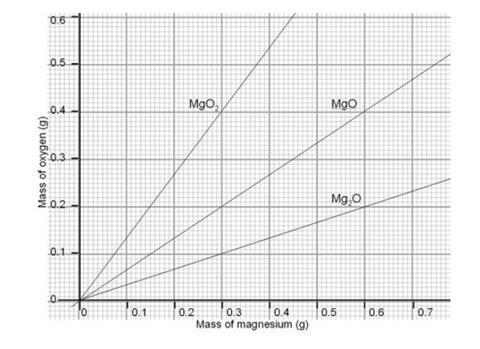
- Learners will need the mass of the magnesium and the mass of oxygen which has combined with it. You will need a copy of the graph for the class. Groups will need to use different lengths of magnesium in order to plot results along the line.
- All learners plot their masses of magnesium and oxygen onto the graph. The majority of the class’ results should fall on or near the line representing the formula MgO, a 1:1 ratio. This shows any anomolous results clearly and will help convince learners who are disappointed by a 1:1.25 ratio, for instance, that the correct formula really is MgO.
Follow-up questions
Answers to the follow-up questions on the student worksheets are available at the end of the teacher notes.
More resources
Add context and inspire your learners with our short career videos showing how chemistry is making a difference.
Downloads
Change in mass when magnesium burns lesson slides
Presentation | PDF, Size 1.84 mbChange in mass when magnesium burns student sheet
Handout | PDF, Size 0.42 mbChange in mass magnesium burns scaffolded student sheet
Handout | PDF, Size 0.44 mbChange in mass magnesium burns teacher notes
Handout | PDF, Size 0.38 mbChange in mass when magnesium burns lesson slides
Presentation | PowerPoint, Size 3.47 mbChange in mass when magnesium burns student sheet
Editable handout | Word, Size 0.65 mbChange in mass when magnesium burns scaffolded student sheet
Editable handout | Word, Size 0.68 mbChange in mass when magnesium burns teacher notes
Editable handout | Word, Size 0.6 mb
Additional information
This is a resource from the Practical Chemistry project, developed by the Nuffield Foundation and the Royal Society of Chemistry. The supporting resources were updated in 2026 by Harry Lord.
Practical Chemistry activities accompany Practical Physics and Practical Biology.
© Nuffield Foundation and the Royal Society of Chemistry
- Prepare(3)
 CPD article
Teaching conservation of mass at 14–16
Help learners master the concept of conservation of mass with these hands-on teaching ideas
 Ideas
Ideas5 effective ways to teach balancing equations
Tried-and-tested approaches to build student skills and confidence
 Course
Quantitative chemistry | Self-led course
Build confidence in your quantitative chemistry knowledge and discover effective topic-specific teaching strategies
- Deliver(7)
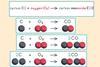 Poster
How to balance chemical equations
Simple steps to success, confidence and fluency with balancing equations for 14–16 learners
 Resource
Balanced chemical equations | Structure strip | 14–16 years
Use scaffolded prompts to support learners to write about balanced chemical equations
 Resource
Interpreting chemical equations for ionic compounds | Developing understanding | 14–16
Help your learners develop mental models of what is represented in balanced chemical equation for ionic compounds with this resource, including teacher notes and a student worksheet
 Resource
Balancing chemical equations using magnesium and oxygen | Johnstone’s triangle worksheets | 14–16 years
Introduce Johnstone’s triangle with these teacher notes and a student worksheet to help learners gain a deeper understanding of balancing chemical equations
 Resource
Interpreting chemical equations | Developing understanding | 14–16 years
Deepen learners’ understanding of interpreting chemical equations by exploring the topic at different conceptual levels
 Resource
Balancing chemical equations using hydrogen and oxygen | Johnstone’s triangle worksheets | 14–16 years
Introduce Johnstone’s triangle to help learners gain a deeper understanding of balancing chemical equations
currently reading
 Class experiment
The change in mass when magnesium burns
A class practical to find the formula of magnesium oxide using the change in mass when magnesium burns
- Literacy(1)
 Resource
Quantitative chemistry | Key terms support | 14–16
Language support pack for quantitative chemistry, with key terms list, accessible glossary, Frayer models and unscrambling definitions
- Assess(4)
 Resource
Balanced chemical equations and fuel | In context | 14–16
Put balancing chemical equations into context with questions based on fuels
 Resource
Balanced chemical equations | Knowledge check | 14–16
Ready-to-use worksheets to assess learning of balancing chemical equations, foundation and higher level
 Resource
Quantitative chemistry | Review my learning | 14–16 years
A set of differentiated worksheets with answers to identify learning gaps and misconceptions on the topic of quantitative chemistry
 Quiz
QuizSymbols, formulas and balanced equations | Bridging the knowledge gap | 14–16 years
Support your students with the transition to post-16 study with this quiz on symbols, formulas and balanced equations
- Enrich(2)
 Class experiment
Finding the formula of copper(II) oxide
Use this demonstration with your 14–16 learners to deduce the formula of copper(II) oxide by reducing it with methane
 News
NewsMaking ammonia production greener
Could lasers offer a more sustainable alternative to the Haber process


7 readers' comments