








All Pedagogy articles
-
 CPD article
Lesson planning: questions, objectives and misconceptions
Discover lesson-planning strategies to inspire and engage all your students while monitoring achievements and meeting learning aims
-
 CPD article
Adaptive teaching helps every student thrive
Practical ways to adapt your teaching so all students can access, understand and succeed in science
-
 CPD article
4 ways to improve learning and understanding
Support meaningful learning in chemistry by incorporating different teaching strategies and help your students make sense of abstract ideas, develop practical skills and connect chemical concepts to the world around them
-
 CPD article
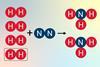
Teaching reacting masses at 14–16
Tackle this key concept in quantitative chemistry with these teacher-tested tips
-
 Resource
Students’ thinking about acids, bases and neutralisation | Beyond appearances
Move beyond appearances and support learners to identify the key misconceptions around acids and bases among secondary aged students.
-
 Misconceptions
Students’ ideas about chemical bonding | Beyond appearances
Understand key difficulties as students develop their understanding of chemical bonding
-
 Resource
Students’ ideas about thermodynamics | Beyond appearances
Go beyond appearances and help learner to understand the thermodynamic reaction from chemical bonds.
-
 Resource
Students’ difficulties with stoichiometry | Beyond appearances
Go beyond apperances and clarify the difficulties that students have around “the mole concept”.
-
 Resource
Students’ ideas about open system chemical events | Beyond appearances
Go beyond appearances to explore open system chemical events, and the key difficulties students have with them.
-
 Resource
Students’ ideas about chemical equilibria | Beyond appearances
Go beyond appearances to help support students ideas around chemical equilibria
-
 Resource
Discussion | Beyond appearances
Engage in the discussion around going beyond appearances and think about your own approach to the chemical world.
-
 Resource
Students’ ideas about specific chemical events: closed system reactions | Beyond appearances
Move beyond appearances to understand the relative densities of matter and particle theory.
-
 Resource
Students’ ideas about the differences between elements, compounds and mixtures | Beyond appearances
Differences between elements, compounds and mixtures form the basis for understanding chemical reactions, explore how students gain these ideas.
-
 Misconceptions
Introducing chemical reactions | Beyond appearances
Explore and tackle common misconceptions as you introduce chemical reactions and the difference between chemical change and change of state
-
 Resource
Students’ ideas about changes of state | Beyond appearances
Changes in state need changes in thinking to be understood, explore how to support learners to develop a new way of seeing state changes
-
 Misconceptions
Students’ ideas about the particulate nature of matter | Beyond appearances
A summary of key challenges and misconceptions as young learners form ideas based on the particle model
-
 Resource
States of matter | Beyond appearances
Deconstruct misconceptions learners may have around states of matter and understand what this means for your teaching
-
 Feature
Here comes the summer
We think a lot about what students forget over the summer break, but what about teachers?
-
 Q&A
Q&AClassroom questions: Reducing teacher talk, beating NQT exhaustion and boosting test performance
Experts answer questions about reducing teacher talk, NQT exhaustion and helping pupils whose test performance doesn’t match their classroom understanding
-
 Feature
Don’t worry about summer learning loss
Kristy Turner arms you with the knowledge to understand and mitigate students’ forgetting over the holidays