








All Analytical chemistry articles – Page 8
-
 Resource
Faces of Chemistry – National Gallery
These videos look at how chemical techniques have helped solve the mystery of the Portrait of Alexander Mornauer.
-
 Resource
Feynman's flowers - Nano scale citizen science.
By taking part in Feynman’s flowers by crowdcrafting: You could help translate thousands of STM images of molecules for their magnetic properties.
-
 Resource
Spectroscopy
Spectroscopy is an invaluable tool in both the qualitative and quantitative analysis of substances. In this set of activities the focus is on colourimetry, UV/Visible spectrometry and Fourier Transform Infrared (FTIR) spectrometry.
-

-
 Feature
Forensic students are getting their hands dirty
Practical research projects are vital in the training of the next generation of forensic scientists, explains Matthew Almond
-
 Resource
The Great Recovery
The Great Recovery is an RSA project launched in September 2012 supported by Technology Strategy Board and key industrial players.
-

-
 Lesson plan
Murder in the lab
Give students a flavour of analytical techniques used in forensic science. Find the kit list, safety instructions and suggested timings in the download
-
 Resource
Challenging Plants: Analytical Methods
Investigations of plants and soil often require the application of some basic analytical methods. Some important ones are given here.
-
 Resource
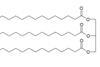
Fatty acids in food supplements
A resource involving the investigation of the chemical composition of some food supplements that contain omega-3 and omega-6 fatty acids.
-
 Resource
Technician in trouble! What solutions are which?
Investigate different chemical solutions with this experiment that explore reactions of acids and alkalis, as well as neutralisation. Includes kit list and safety instructions.
-
 Resource
Funny felt pens
Find out how colour changing pens work in this practical into acids and alkalis in inks. Includes kit list and safety instructions.
-
 Feature
How much horse meat?
It's a simple enough question, but the media, the public and even government officials are having trouble understanding just how much horse meat is in some processed food. Ian Farrell makes sense of the confusion
-
 Resource
School’s Analyst past papers 2013
Challenge your students to carry out back titrations with these previous Schools’ Analyst questions
-
 Resource
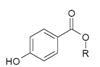
Parabens in household products
This is a laboratory-based investigation (either using GC or HPLC) of preservative chemicals commonly found in household products - parabens.
-
 Resource
Forensic Analysis: Laboratory Manual
Pre laboratory exercises and laboratory practicals in Forensic Analysis.
-
 The Mole
A nose for trouble
Ian Le Guillou finds out how new technology and chemistry are catching up with sniffer dogs in the race to rescue people trapped in disaster zones
-
 Feature
Spectroscopy in your classroom - portable analysis
Tracy McGhie explains how your students can solve a murder mystery using state-of-the-art equipment
-
 Soundbite
Detective work and food fraud
How did horse meat remain undetected in the food chain for long enough to reach supermarket shelves? Ian Farrell investigates
-
 Resource
Challenging Plants: Phytomanagement - Practicals
Plants have much to offer in terms of phytoremediation, phytoextraction and the potential of using plants to mine metals. This resource is designed to help students realise this potential knowledge and understand the key underpinning scientific principles.