








All articles by Catherine Smith
-
 Feature
Work with maths teachers to see students succeed in chemistry
Map skills, sequence curriculums and tackle different terminology and approaches to boost your students’ maths skills in science
-
 Resource
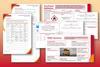
Crude oil | Key terms support | 14–16
Language support pack for the introductory organic chemistry topic crude oil, including fractional distillation, properties of hydrocarbons, cracking and addition polymers
-
 Resource
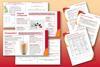
Organic compounds and reactions | Key terms support | 14–16
Language support pack for organic compounds and reactions, with key terms list, accessible glossary, Frayer models and unscrambling definitions
-
 Resource
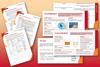
Elements, compounds and mixtures | Key terms support | 14–16
Key terms list, accessible glossary, Frayer models and unscrambling definitions provide comprehensive language support for this topic
-
 Feature
Why school trips matter
Tips for planning an outing to build positive relationships, raise learners’ science capital and bring a fresh perspective back to the classroom
-
 Resource
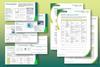
Elements, compounds and mixtures | Key terms support | 11–14
Language support pack for elements, compounds and mixtures, with key terms list, accessible glossary, Frayer models and unscrambling definitions
-
 Ideas
IdeasCombine stories and demos for wow lessons
Weave storytelling into classroom practicals to deepen engagement and understanding
-
 Poster
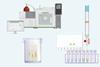
Commercial applications of chromatography
Show post-16 students how the analytical techniques they learn in the classroom have real-world applications with this poster and fact sheet
-
 Games and puzzles
4-mewn-llinell atomau, moleciwlau ac ïonau
Parwch y symbol neu’r diagram gronynnau â’r math o ronyn y mae’n ei gynrychioli. Y cyntaf i gael 4-mewn-llinell fydd yn ennill!
-
 Games and puzzles
Atoms, molecules and ions 4-in-a-line
Match the symbol or the particle diagram to the type of particle it represents. Get 4-in-a-line to win!
-
 Resource
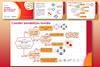
Coeden benderfynu: pa fath o fondio? | 14–16 oed
Defnyddiwch y goeden benderfynu hon i helpu eich dysgwyr i ddod o hyd i atebion i gwestiynau am adeiledd a bondio drwy sgaffaldio eu ffordd o feddwl
-
 Resource
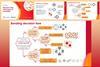
Decision tree: what type of bonding? | 14–16 years
Use this decision tree to help your learners find answers to questions about structure and bonding by scaffolding their thinking
-
 Ideas
IdeasScaffold learning with decision trees
Help students unravel complex topics with a decision tree – a visual support you can gradually remove
-
 Resource
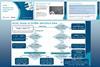
Decision tree: acid, base or buffer? | 16–18 years
Help learners understand which equation they need to answer questions about acids, bases and buffers by scaffolding their thinking
-
 CPD article
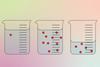
How to teach solubility at 14–16
Concentrate learners’ minds on the key aspects of solutions
-
 CPD article
Teaching isomerism at post-16
Ensure your students succeed with structural and stereoisomerism
-
 Resource
A practical investigation of cis-trans isomerism in transition metal complexes
Investigate isomerism in transition metal complexes with this experiment, including pre- and post-lab questions
-
 CPD article
Teaching structure and bonding in metals at 14–16
Help your learners to master the fundamentals of metallic bonding
-
 Poster
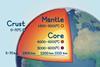
How to teach the Earth’s structure for younger students
Get to the core of the Earth’s composition with this poster, fact sheet and classroom activity
-
 Resource
Patient prognosis | Problem based practical activities
Dilution, colorimetry and observation skills come together to get students to adapt their chemical knowledge to support medicine.