








All Ions articles
-
 News
NewsResearchers crack two century challenge to form calcium bicarbonate crystals
Give students a real example of how solubility, ionic bonding and reaction conditions affect salt formation
-
 Resource
Atomau ac ïonau | Taflenni gwaith Adolygu fy nysgu | 14–16 oed
Defnyddiwch y set hon o daflenni gwaith, sy’n cynnig tair lefel o gefnogaeth, i ddod o hyd i fylchau yn y dysgu a chamsyniadau
-
 Resource
Atoms and ions | Review my learning worksheets | 14–16 years
Identify learning gaps and misconceptions with this set of worksheets offering three levels of support
-
-
 Misconceptions
Ionic bonding: true or false? | Chemical misconceptions II
Check your learners’ understanding of ionic bonding with this true or false worksheet
-
 Ideas
IdeasWays to teach atoms and ions
Use these six approaches to ensure learners master ion formation at 14–16
-
 Games and puzzles
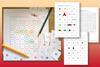
4-mewn-llinell atomau, moleciwlau ac ïonau
Parwch y symbol neu’r diagram gronynnau â’r math o ronyn y mae’n ei gynrychioli. Y cyntaf i gael 4-mewn-llinell fydd yn ennill!
-
 Games and puzzles
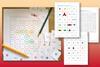
Atoms, molecules and ions 4-in-a-line
Match the symbol or the particle diagram to the type of particle it represents. Get 4-in-a-line to win!
-
 Resource
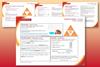
Atoms and ions of copper | Johnstone’s triangle worksheets | 14–16 years
Use these worksheets to develop learners’ understanding of atoms and ions, including a demonstration of a metal displacement reaction
-
 Lesson plan
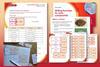
Writing formulas for ionic compounds | 14–16 years
Practise writing formulas for ionic compounds and revise common positive and negative ions, using this lesson plan with activities
-
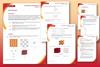 Resource
Ionic bonding | Developing understanding | 14–16 years
Develop learners’ understanding of ionic lattices through comparing 2D and 3D representations
-
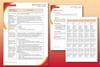 Resource
Atomau ac ïonau | Stribed strwythur | 14–16 oed
Cefnogwch y dysgwyr i gofio ac ysgrifennu am ffurfiant ïonau a’r ffactorau sy’n effeithio arno
-
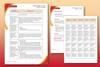 Resource
Atoms and ions | Structure strip | 14–16 years
Support learners to recall and write about ion formation and factors that affect it
-
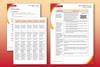 Resource
Metallic bonding | Structure strip | 14–16 years
Describe the metallic bonding model and explain how this leads to particular properties in metals, with this scaffolded writing activity
-
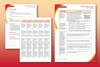 Resource
Bondio metelig | Stribed strwythur | 14–16 oed
Disgrifiwch y model bondio metelig ac eglurwch sut mae hyn yn arwain at briodweddau penodol mewn metelau, gyda’r gweithgaredd ysgrifennu hwn sydd wedi’i sgaffaldio
-
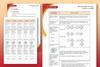 Resource
Ionic bonding | Structure strip | 14–16 years
Understand the models and diagrams used to represent ionic bonding and their limitations, with this scaffolded writing activity
-
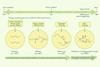 Poster
Teaching the bonding spectrum
Everything you need to help your post-16 grasp the realities of bonding, electronegativity and intermolecular forces
-
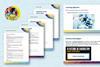 Project
Chemistry at the crime scene investigation | Chemistry for All project | 11–14 years
This forensic science project uses chemical analysis and observation skills to investigate a crime and solve the case
-
 Exhibition chemistry
Demonstrate intermolecular forces with colourful separations
Layer intermolecular interactions into your practical lessons with these chromatic experiments
-
 CPD article
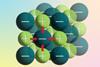
How to teach ionic bonding at 14–16
Steer students away from ionic bonding misconceptions with these ideas for your classroom