









All RSC Education articles in Non-EiC content – Page 8
-
 Resource
On This Day - Jun 02 : Edward Elgar was born
Although he is best known for being a musical composer, Elgar was a keen amateur chemist who built a laboratory in his back garden and carried out experiments there. Some of his surviving musical manuscripts are still stained with chemicals!
-
 Resource
On This Day – Aug 02 : Discovery of positrons
He was examining chamber photographs of cosmic rays when he realised that the tracks orientation revealed the existence of positively charged particles too small to be protons. These sub-atomic particles have the same mass as an electron, but with a positive charge.
-
 Resource
On This Day – Sep 02 : Friedrich Ostwald was born
He was one of the founders of classical physical chemistry. In particular, Ostwald was a pioneer of electrochemistry and chemical dynamics. He won the Nobel Prize for Chemistry in 1909 for his work on catalysis, chemical equilibrium, and reaction velocities.
-
 Resource
On This Day - Oct 02 : First atomic clock
Atomic clocks keep time using the microwave signal that is emitted when electrons in atoms change energy levels. This early clock, the Atomicron, used the constant frequency from the oscillations of the caesium (Cs) atom at 9,192,631,830 MHz.
-
 Resource
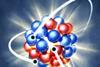
On This Day - Dec 02 : Atomic Age began
The first artificially initiated self-sustained nuclear fission reaction was engineered by the Italian scientist Enrico Fermi at the University of Chicago.
-
 Resource
On This Day - Mar 03 : Joseph Wharton was born
He improved the process of refining nickel (Ni) and his company made the first pure nickel metal. Wharton was the driving force in establishing the zinc (Zn) and nickel metal industries in the United States.
-
 Resource
On This Day - May 03 : George Thomson was born
Thomson shared the Nobel Prize in Physics in 1937 with Clinton Davisson for their discovery of the wave properties of electrons when diffracted by crystals. He was the son of Nobel laureate Joseph John Thompson.
-
 Resource
On This Day - Jun 03 : Emmet Culligan died
He invented the Culligan water softener system that made water softening available to home users. These systems reduce the amount of calcium (Ca), magnesium (Mg) and other metal cations found in hard water. He founded the Culligan international water treatment products company in 1936.
-
 Resource
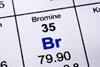
On This Day – Jul 03 : Discovery of bromine
The French chemist was an unknown young laboratory assistant when he discovered the element in seawater, which is a liquid at room temperature. This was independent to Carl Jacob Löwig’s preparation of bromine one year earlier. The word bromine comes from the Greek word bromos, meaning “stench”.
-
 Resource
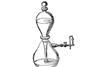
On This Day – Aug 03 : Platinum catalysis
He realised that a platinum (Pt) sponge could cause the ignition of hydrogen (H) at room temperature by lowering the activation energy. This effect was the precursor to the theory of catalysis, and in 1835 the term “catalyst” was coined by Swedish chemist Jacob Berzelius.
-
 Resource
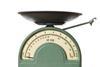
On This Day – Sep 03 : Fritz Pregl was born
He began research on bile acids in 1904. With only tiny yields to study, he pioneered micro analytical techniques and designed a new balance capable of weighing 20 grams to an accuracy of 0.001 milligrams. Pregl was awarded the Nobel Prize in Chemistry 1923 for his efforts.
-
 Resource
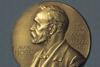
On This Day - Oct 03 : Charles Pedersen was born
He shared the 1987 Nobel Prize in Chemistry for the synthesis of crown ethers. These are a group of compounds that can “recognize” each other and choose which other molecules to form complexes, much like the behaviour of molecules found in living organisms.
-
 Resource
On This Day - Nov 03 : Antifouling paint patent
It was made from a mixture of a copper oxide (CuO), tar and naphtha, and offered protection against growth of barnacles and seaweed for twelve months. There are now concerns that copper oxide based antifouling paints are environmental pollutants, and replacements are being introduced.
-
 Resource
On This Day - Dec 03 : Bhopal disaster
A leak of toxic methyl isocyanate gas occurred at the Union Carbide India pesticide plant. It caused almost 4000 deaths, and is considered to be one of the World’s worst industrial catastrophes.
-
 Resource
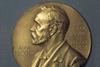
On This Day - Mar 04 : First carbon dating method
Radiocarbon dating is a method that uses the half-life of carbon-14 to determine the age of carbon-rich materials up to about 60,000 years old. Libby was awarded the Nobel Prize in Chemistry in 1960 for his work.
-
 Resource
On This Day - Jun 04 : French Chemical Society
The Society was originally modeled on the British Chemical Society, the precursor of the RSC. It seeks to foster the communication of new ideas and facts throughout France and across international borders.
-
 Resource
On This Day – Jul 04 : Ernst Beckmann was born
He is known for inventing the Beckmann thermometer – a device used to measure small differences in temperature, rather than absolute temperature. The thermometer typically covers a small range of 5 °C, but it is possible to estimate temperature changes with an accuracy of 0.001 degrees.
-
 Resource
On This Day – Sep 04 : Stanford Moore was born
He shared the Nobel Prize in Chemistry with Christian Anfinsen and William H. Stein in 1972 for their work on the structure of ribonuclease enzymes. These enzymes catalyse the degradation of ribonucleic acids (RNA) and are involved in the destruction of RNA viruses.
-
 Resource
On This Day - Oct 04 : Kenichi Fukui was born
His career was devoted to explaining the nature of chemical reactions. He shared the 1981 Nobel Prize in Chemistry for his investigation into the mechanisms of chemical reactions. Specifically, this was for his work on the role of frontier orbitals, which have loosely bonded electrons.
-
 Resource
On This Day - Nov 04 : Oak Ridge nuclear disaster
This was the world’s second nuclear reactor to achieve this status. However, from then on the reactor performed flawlessly. With a self-sustaining reaction, it produced a third of a ton of irradiated uranium (U) a day. The world’s first few grams of plutonium (Pu) were produced in just two months.