








All Quantitative chemistry and stoichiometry articles – Page 3
-
 Class experiment
Determining the relative atomic mass of magnesium
Use this practical to determine the relative atomic mass of magnesium using its reaction with hydrochloric acid
-
 Class experiment
Pennu màs atomig cymharol magnesiwm
Defnyddiwch y gwaith ymarferol hwn i bennu màs atomig cymharol magnesiwm gan ddefnyddio ei adwaith ag asid hydroclorig.
-
 Class experiment
Finding the formula of copper(II) oxide
Use this demonstration with your 14–16 learners to deduce the formula of copper(II) oxide by reducing it with methane
-
 Resource
Moles and volume | Developing understanding | 14–16 years
Deepen your learners’ understanding of the idea that equal volumes of gases contain an equal number of molecules with this worksheet
-
 Resource
Introducing chemical change | Key terms support | 11–14
Language support pack for Introducing chemical change, with key terms list, accessible glossary, Frayer models and unscrambling definitions
-
 Resource
Moles and mass | Developing understanding | 14–16 years
Develop understanding of the relationship between the mass of one mole, the number of moles and the mass of a substance
-
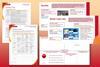 Resource
Quantitative chemistry | Key terms support | 14–16
Language support pack for quantitative chemistry, with key terms list, accessible glossary, Frayer models and unscrambling definitions
-
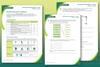 Resource
Reactant and product substances | Developing understanding | 11–14
Use these worksheets to secure and deepen your learners’ understanding of reactants and products in chemical changes
-
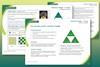 Resource
Iron and sulfur reaction | Johnstone’s triangle | 11–14 years
Develop understanding of reactants and products at different conceptual levels using an iron and sulfur reaction as an example
-
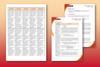 Resource
Relative mass | Structure strip | 14–16 years
Support learners to demonstrate their understanding of relative mass, using scaffolded writing prompts
-
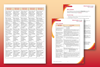 Resource
Màs cymharol | Stribed strwythur | 14–16 oed
Cefnogi’r dysgwyr i ddangos eu dealltwriaeth o fàs cymharol, gan ddefnyddio awgrymiadau ysgrifennu wedi’u sgaffaldio
-
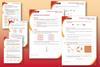 Resource
Interpreting chemical equations | Developing understanding | 14–16 years
Deepen learners’ understanding of interpreting chemical equations by exploring the topic at different conceptual levels
-
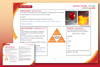 Resource
Balancing chemical equations using hydrogen and oxygen | Johnstone’s triangle worksheets | 14–16 years
Introduce Johnstone’s triangle to help learners gain a deeper understanding of balancing chemical equations
-
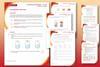 Resource
Concentration and mass | Developing understanding | 14–16 years
Encourage learners to deepen their understanding of concentration and mass from the macroscopic to sub-microscopic level
-
 Resource
Crynodiad a màs | Datblygu dealltwriaeth | 14–16 oed
Annog y dysgwyr i ddyfnhau eu dealltwriaeth o grynodiad a màs o’r lefel facrosgopig i’r lefel is-ficrosgopig
-
 Resource
Concentration of sodium hydroxide | Johnstone’s triangle worksheets | 14–16 years
Think about sodium hydroxide (NaOH) solution at a macroscopic, sub-microscopic and symbolic level
-
 Class experiment
Titradiad asid–bas ar raddfa ficro
Defnyddio titradu ar raddfa ficro i gwblhau niwtraliad asid–bas gyda sodiwm hydrocsid yn y sesiwn ymarferol hon yn y dosbarth. Mae’n cynnwys rhestr o’r cyfarpar a chyfarwyddiadau diogelwch.
-
 Class experiment
A microscale acid–base titration
Use microscale titration to complete an acid–base neutralisation with sodium hydroxide in this class practical. Includes kit list and safety instructions.
-
 Exhibition chemistry
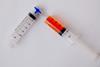
Explore the nitrogen oxides: Avogadro’s law revisited
Use colourless nitrogen monoxide and oxygen gases to produce coloured nitrogen dioxide gas
-
 Misconceptions
Mass and dissolving | Chemical misconceptions II | 11–14 years
Use these questions to explore dissolving solids in liquids and tackle common misconceptions