









All Feature articles – Page 29
-
 Feature
Dealing with nuclear waste
Nuclear power is a low-carbon technology, but it does come with a catch: it produces waste that emits harmful radiation for many thousands, even millions of years. UK chemists, however, are working to produce materials and technology to deal with this problem.
-
 Feature
Flu drugs - pathway to discovery
If bird flu ever starts to transmit from human to human, with no effective vaccine available our only defence will be the antiviral drugs Relenza and Tamiflu
-
 Feature
Mendeleev - the man and his legacy...
A look at the life and work of Russia's most famous chemist, who died 100 years ago
-
 Feature
The periodic tables of Mendeleev
How Mendeleev corrected the atomic weights of In, Ce and U, and thus constructed the remarkable Periodic Table of 1871
-
 Feature
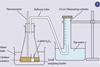
Investigating activation energies
A challenge for post-16 students to investigate the activation energies of the enzyme-catalysed and the inorganic-catalysed decomposition of hydrogen peroxide
-
 Feature
Molecular computers - tomorrow's technology?
As the miniaturisation of silicon chips fast approaches its limit chemists are copying Nature in attempt to build computers atom by atom, molecule by molecule
-
 Feature
Drugs for dementia
About 10 per cent of men and women over 65, and nearly half of those over 80, have Alzheimer's disease
-
 Feature
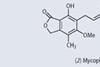
Phenols in medicine
Phenol encountered in school or college chemistry laboratories demands special respect on account of its toxic and corrosive nature. But phenol and its derivatives do have a few medicinal surprises
-
 Feature
Ancient coins
Chemistry has played its part in numismatics - in the manufacture, analysis, aesthetics and conservation of coinage
-
 Feature
Applied science: on course
Applied science has a key role in the 14-16 curriculum, and its popularity is growing
-
 Feature
Natural products - back in vogue
Chemists are once again turning to Nature to replenish the medicine chest
-
 Feature
Glass bones
'Bioactive' ceramic and glass alternatives could improve the quality of life for millions of people suffering from osteoporosis
-

-
 Feature
A forgotten anniversary?
Has the significance of William Henry Perkin's synthesis of the purple dye mauveine begun to fade?
-
 Feature
Chapattis and the English disease
In the early 1700s in England 'nothing was so much feared or talk'd of as Rickets among Children'. We now know that this softening of the bones, is caused by a deficiency of vitamin D.
-
 Feature
Making the most of starch
With some clever chemistry starch represents an enormous and sustainable source of renewable carbon for non-food applications.
-
 Feature
Amadeo Avogadro 1776-1856
This year marks the 150th anniversary of the death of the Italian chemical physicist, Amedeo Avogadro.
-
 Feature
Artemisinin and a new generation of antimalarial drugs
Every year between one and two million people - mainly children - living in the tropics and subtropics die of malaria.
-
 Feature
Biting insects - a challenge for chemists
In many parts of the world biting insects are major disease vectors, being the source of malaria and yellow fever for example, though in the UK they are mainly just a nuisance
-
 Feature
Chlorpromazine - unlocks the asylum
The history of pharmaceuticals is enriched by accounts of drugs developed for one therapeutic purpose that found application in another. This is true for chlorpromazine, a treatment for severe mental illness