







All Feature articles – Page 27
-
 Feature
Jesuits' powder and quinine
The powdered bark of the South American cinchona tree is the source of quinine - the mainstay treatment for malaria for centuries
-
 Feature
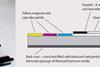
Printing on plastic
The dye diffusion thermal transfer method is used for printing digital photos on plastics, and for direct printing on PVC cards
-
 Feature
The ambassadors
Undergraduate chemists get the opportunity to teach as part of their degree course
-
 Feature
Radioactivity discovered
Centenary celebrations for the founding fathers of radioactivity - Henri Becquerel and Ernest Rutherford.
-
 Feature
Magnetic resonance imaging (MRI) in medicine
Magnetic resonance imaging (MRI) is an invaluable tool in diagnostic medicine.
-
 Feature
Supercritical processing
Chemists at the University of Nottingham use supercritical fluids to process polymers for drug delivery systems and for tissue engineering.
-
 Feature
Better than antibiotics?
Chemicals that make bacteria lose their hair could be a new weapon in the fight against infections, and at the same time help to overcome the problem of antibiotic resistance
-
 Feature
Librium and Valium - anxious times
This year marks the 100th anniversary of the birth of Leo Sternbach, discoverer of the anti-anxiety drugs Librium and Valium
-
 Feature
Deadly things come in small packages
Painstaking work by chemists to characterise deadly alkaloids exuded in the skin of some brightly coloured poison arrow frogs has offered leads for new and useful pharmaceuticals
-
 Feature
The power of NMR: in two and three dimensions
Over the past 30 years chemists have developed NMR experiments in two and three dimensions that enable them to solve the structure of complex organic compounds
-
 Feature
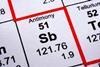
Antimony revisited
The intriguing chemistry of antimony, one of the earliest elements to be discovered
-
 Feature
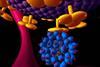
Nanomedicine arrives
Nanoscale chemical entities target the building blocks of biology with medicinal consequences
-
 Feature
The Power of NMR: The Beginnings
Originally a curiosity of the quantum world, NMR is now an essential tool for chemists, biochemists and clinicians
-
 Feature
E-learning in practice
Making the most of the Internet and ICT to support teaching and learning in science
-
 Feature
Multiple-choice tests - are they fit for purpose?
Of what value are multiple-choice tests in the new GCSE Science specifications?
-
 Feature
Cambridge Pre-U chemistry
The 'Cambridge Pre-U' qualifications - the latest alternatives to A-levels
-
 Feature
Fighting cancer - the early years
Research and development of nitrogen mustards 60 years ago sets the scene for new era in the treatment of cancer
-
 Feature
Photochromism in view
A context-based chemistry practical highlighting the importance of chemical kinetics and spectroscopy in commercial photochromic dyes
-
 Feature
From waxes to riches
Supercritical carbon dioxide can be used to remove valuable chemicals, including waxes, from plants, the most widely available and cheap source of biomass in the world
-