






All RSC Education articles in Non-EiC content – Page 7
-
 Resource
On This Day - Feb 16 : Man-made diamonds produced
The small diamonds were produced in Stockholm by the ASEA, one of Sweden’s major electrical manufacturing companies. The ASEA had employed a team of five scientists and engineers to work on the top-secret diamond-making project QUINTUS.
-
 Resource
On This Day - Jan 17 : Friedrich Kohlrausch died
His research focussed on the thermal, electrical and magnetic properties of electrolytes. He is recognised as one of the most important experimental physicists, with his early work contributing to the absolute system of electrical and magnetic measuring units.
-
 Resource
On This Day - Feb 17 : Beilstein was born
He published a still-popular standard reference work on organic chemistry, called the “Handbuch der organischen Chemie”. It contained approximately 2,200 pages on 15,000 organic compounds.
-
 Anecdote
On This Day - Feb 18 : Introduction of isotope
British chemist Frederick Soddy coined the term isotope (from the Greek, meaning ‘in the same place’) to describe different elements that can be chemically indistinguishable but have different atomic weights and characteristics.
-
 Resource
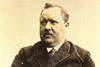
On This Day - Feb 19 : Svante Arrhenius was born
He is one of the founders of physical chemistry and perhaps most famous for proposing the Arrhenius equation, which describes the rate of a chemical reaction.
-
 Resource
On This Day - Jan 20 : de Chancourtois was born
He was the first person to organise elements by atomic weights, by plotting a graph of the elements around a cylinder with a circumference of 16 units corresponding to the weight of oxygen (O). Elements that appeared above and below each other shared similar periodic properties.
-
 Resource
On This Day - Jan 21 : Magnesium produced
Magnesium (Mg) was first extracted from seawater through an electrolytic process. Is the lightest of all structural elements – one-third less dense than aluminium – and is used in flares, pyrotechnics, incendiary bombs, aeroplane and missile construction.
-
 Resource
On This Day - Feb 21 : Henrik Dam was born
He received the Nobel Prize in Physiology or Medicine in 1943 along with Edward Doisy for their discovery of vitamin K. Vitamin K is part of a group of fat-soluble vitamins that are needed for blood coagulation and in metabolic pathways.
-
 Resource
On This Day - Jan 22 : Alan J Heeger was born
He was awarded the Nobel Prize in Chemistry in 2000 along with Alan MacDiarmid and Hideki Shirakawa for “their discovery and development of conductive polymers”. They found that modified plastics could conduct electricity, which has many commercial uses such as LEDs and mobile telephone display screens.
-
 Resource
On This Day - Feb 23 : Chemical Society first meet
In 1980, the Chemical Society merged with the Royal Institute of Chemistry, Faraday Society and the Society for Analytical Chemistry to become what is now known as the Royal Society of Chemistry.
-
 Resource
On This Day - Jan 24 : Morris Travers was born
He worked with Scottish chemist William Ramsay to discover the noble gases krypton (Kr), xenon (Xe) and neon (Ne). He also played a pivotal role in setting up the Indian Institute of Science in Bangalore.
-
 Resource
On This Day - Jan 26 : Nuclear fission reported
The discovery was made by Otto Hahn and Fritz Strassmann and was interpreted by Lise Meitner and Otto Frish. Danish physicist Niels Bohr then reported the discovery of nuclear fission at the Washington conference. Related resources: Chemistry will play a central role to the future of UK nuclear The ...
-
 Resource
On This Day - Jan 31 : Irving Langmuir was born
He was awarded the Nobel Prize in Chemistry in 1932 for his work on monolayers and surface absorption. He was the first non-academic chemist to be awarded the prize.
-
 Resource
On This Day - May 01 : AC motor patented
Not only was this the first alternating current (AC) motor, but it also heralded a new system of power transmission, which is the basis for the mains power we use today. The Serbian-American physicist, engineer and inventor is recognised as one of the pioneers of electric power.
-
 Resource
On This Day - Jun 01 : Flixborough disaster
A temporary pipe containing cyclohexane caught fire and burst. It left 28 people dead, 36 injured and around 1800 nearby buildings damaged. Consequently, UK government regulations in hazardous industrial processes were significantly tightened.
-
 Resource
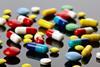
On This Day - Oct 01 : Thalidomide was marketed
This notorious drug was marketed as a mild sleeping pill that was safe even for pregnant women. It wasn’t until 1962 that the severe side effects were revealed, where it had caused the development of malformed limbs in babies.
-
 Resource
On This Day - Dec 01 : Martin Klaproth was born
In 1789 he discovered uranium (U), which was named after the planet Uranus. This planet was actually discovered eight years earlier by another German scientist, William Hershel.
-
 Resource
On This Day - Mar 02 : Discovery of radioactivity
Becquerel discovered that potassium uranium sulfate crystals can produce images on photographic plates even when kept in the dark. He deduced that the crystals must spontaneously emit radiation, which earned him the Nobel Prize in Physics in 1903 along with Marie Curie. Related resources: 175 Faces of chemistry ...
-
 Resource
On This Day - Apr 02 : Theodore Richards died
He determined accurate measurements of elemental atomic weights, suggesting the existence of isotopes. He was awarded the Nobel Prize in Chemistry in 1914 as recognition of his work.
-
 Resource
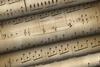
On This Day - Jun 02 : Edward Elgar was born
Although he is best known for being a musical composer, Elgar was a keen amateur chemist who built a laboratory in his back garden and carried out experiments there. Some of his surviving musical manuscripts are still stained with chemicals!