








All Physical chemistry articles
-
 Lesson plan
Conservation of mass in dissolving and precipitation | 11–14 years
Explore what happens during precipitation reactions and when substances dissolve using this lesson plan
-
 Lesson plan
What is stuff made of? Matter, atoms and elements | 11–14 years
Use this lesson plan to introduce the properties and behaviour of atoms as the smallest parts of elements
-
 Class experiment
Determining the relative atomic mass of magnesium
Use this practical to determine the relative atomic mass of magnesium using its reaction with hydrochloric acid
-
 Class experiment
Pennu màs atomig cymharol magnesiwm
Defnyddiwch y gwaith ymarferol hwn i bennu màs atomig cymharol magnesiwm gan ddefnyddio ei adwaith ag asid hydroclorig.
-
 Job profile
Laboratory technician, steelmaking
Jamie’s cutting carbon in the first step of steelmaking: iron ore pellets
-
 Class experiment
Supercooling and the energetics of freezing
Explore what happens when a liquid is supercooled and develop learners’ observation skills in this class practical
-
 Lesson plan
What happens when a substance changes state? | Lesson plan | 11–14 years
Use this lesson plan, complete with scaffolded and unscaffolded student sheets, to secure learners’ understanding of changes of state
-
 Job profile
Commercial director, chemical manufacturing
Mike is helping industries make chemicals in a cleaner, faster way
-
 Extension
Boiling point: a surprising measurement | Stretch and challenge | 11–14 years
Develop critical thinking skills by guiding learners to evaluate possible explanations for an unexpected experimental result
-
 Lesson plan
What happens when something dissolves? | Lesson plan | 11–14 years
Explore dissolving and help your learners explain observations using the particle model with this lesson plan and activities
-
 Misconceptions
Mass and dissolving | Chemical misconceptions II | 11–14 years
Use these questions to explore dissolving solids in liquids and tackle common misconceptions
-
 Class experiment
Particles in motion? | Classic chemistry experiments | 11–14 years
Explore the movement of gas particles by reacting calcium carbonate with hydrochloric acid and testing with limewater
-
 Class experiment
Experiments with particles | Classic chemistry experiments | 11–14 years
Use common classroom items to explore physical states and how materials interact in these three practical investigations
-
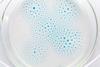 Exhibition chemistry
Evaporation, entropy and the Marangoni effect
Demonstrate thermodynamics to your 16–18 learners with this simple experiment
-
 CPD article
How to teach Maxwell–Boltzmann distribution curves at post-16
Enhance learners’ knowledge and understanding of reaction kinetics and how to interpret graphs
-
 CPD article
Everything you need to teach energetics at 14–16
Use these ideas to help students understand the world of energetics, enthalpy and equilibrium
-
 Job profile
Head of computational toxicology
George uses computer modelling to make sure products such as food and drink, medicines, pesticides, cosmetics and household products don’t cause harm and haven’t been contaminated by toxic materials
-
 Exhibition chemistry
Creating a supersaturated gas evolving oscillator
Use this fizzy practical for a kinetic and thermodynamic showdown in class
-
 Resource
Spot the entropy errors worksheet | 16–18 years
Develop your learners’ metacognitive skills using thermodynamics questions and calculations
-
 Article
What state of matter is fire?
The burning question – is fire a solid, liquid, gas or plasma?