








All Practical skills and safety articles – Page 16
-
 Resource
First Year Undergraduate Chemistry Laboratory Course Manual 2011-2012
Student laboratory manuals to support first year undergraduate practicals of Core Chemistry 1A or Core Chemistry 1A and 1B courses at Durham University.
-
 Class experiment
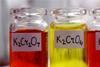
A chromate–dichromate equilibrium
Try this class practical to investigate an equilibrium between chromate(VI), dichromate(VI) and hydrogen ions. Includes kit list and safety instructions.
-
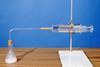 Class experiment
The rate of reaction of magnesium with hydrochloric acid
A class practical on reacting magnesium with hydrochloric acid and how to measure the rate of reaction. Includes kit list and safety instructions.
-
 Resource
Chemistry in Action: Laboratory Manual
Laboratory manual describing 11 x 3 hour experiments. Students are presented with a case scenario of a suspicious death, which they must investigate via a series of laboratory experiments.
-
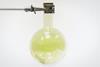 Demonstration
Reactions of chlorine, bromine and iodine with aluminium
Try this demonstration to produce some spectacular exothermic redox reactions by reacting aluminium with halogens. Includes kit list and safety instructions.
-
 Resource
Chemistry stinks - olfactory indicators experiment
Chemicals that change colour with pH are frequently used as indictors for acid-base titrations. The aim of this experiment it to determine the concentration of an unknown base using garlic powder as an olfactory indicator. Chemistry stinks – olfactory indicators experiment Class practical Chemicals that change colour with pH ...
-
 Resource
Chemistry stinks - class smelling activity
This class practical introduces concepts of chemistry and smell. A number of common chemicals with distinctive smells have been chosen to help students get their nose around different functionalities in chemistry. This is done via a series of solutions, which can be smelled using smelling sticks.
-
 Demonstration
Handling liquid bromine and preparing bromine water
Find out how to handle liquid bromine and prepare bromine water safely using these health, safety and technical notes.
-
 Class experiment
Testing the hardness of water
Try this practical with your students to measure the hardness of water samples and investigate the effect of boiling. Includes kit list and safety instructions.
-
 Feature
Practical science at a distance
Eleanor Crabb discusses the advantages and practicalities of teaching experimental skills online
-
 Demonstration
Fat-pan fires and the conditions for combustion
Use this demonstration to illustrate the conditions required to start combustion, and how to put out a pan fire safely. Includes kit list and safety instructions.
-
 Class experiment
Preparing and using cobalt chloride indicator papers
Make your own cobalt chloride indicator papers, which can be used to test for the presence of water. Includes kit list and safety instructions.
-
 Demonstration
Generating, collecting and testing gases
Read our standard guidance on generating, collecting and testing gases during practical experiments, including carbon dioxide, hydrogen, oxygen and chlorine.
-
 Class experiment
Making glass
Try this class practical to make samples of glass using lead oxide, zinc oxide and boric acid. Includes kit list and safety instructions.
-
 Class experiment
Reacting copper(II) oxide with sulfuric acid
Illustrate the reaction of an insoluble metal oxide with a dilute acid to produce crystals of a soluble salt in this class practical. Includes kit list and safety instructions.
-
 Resource
Inspirational chemistry book
A collection of resources, aligned with GCSE bodies, to support learners in England, Wales, and N Ireland.
-
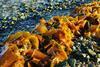 Demonstration
Extracting iodine from seaweed
Discover how ribbon seaweed (or kelp) can be used as a source of iodine in this demonstration or class experiment. Includes kit list and safety instructions.
-
-
 Resource
What happens when things burn?
This resource presents chemists as real people and not stereotypical ‘mad scientists’ whose lives are completely dominated by science.
-
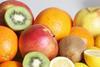 Resource
Scurvy - the mystery disease
This resource contains activities for students which uses the story of scurvy to investigate the scientific method, and how science was done in the past.