








All Biological chemistry articles – Page 9
-
 The Mole
Trade secrets... Curdling of soya milk
Secrets of the trade: Jonathan Hare asks why soya milk tends to form hundreds of floating lumps when added to coffee
-
 Resource
Faces of Chemistry – Reckitt Benckiser: Gaviscon
Go behind the scenes of the Research and Development department that created Gaviscon.
-
-
 Resource
On This Day - Jan 30 : Peter Agre was born
He was awarded half of the Nobel Prize in Chemistry in 2003 for his discovery of aquaporins, which are proteins embedded in cell walls that regulate water movement. Each cell is comprised primarily of water, and so aquaporins are required to ensure organised water flow through.
-
 Feature
The ascent of molecules
Life's molecular origins might not be preserved in the fossil record but, as Laura Howes finds out, chemists are working to fill in the gaps
-
 Opinion
Chemistry gives most of the answers
While researching a new book, Bill Bryson takes a trip through cyberspace to try to answer a childhood question – and discovers that chemistry is really quite exciting
-
 Feature
Deadly mushroom chemistry
Can you tell the difference between a tasty paddy straw mushroom and a toxic death cap? Emma Shiells talks to the experts about the potentially deadly chemistry hidden in those gills
-
 Resource
Chemistry Now: Combinatorial Chemistry
Combinatorial chemistry is a group of techniques for synthesising large arrays of related chemicals and is increasingly being used by pharmaceutical companies in their search for new drugs.
-
 Resource
Challenging Plants: Fertilisers
Nutrients essential for plant growth are obtained naturally from soil or other growing media. However, supplies become depleted and fertilisers are needed to increase the availability of nutrients to plants. An understanding of chemical changes is used to making fertilisers, often designed to meet specific requirements such as particular nutrient ...
-
 Resource
On This Day - Feb 05 : Lafayette Mendel was born
Mendel is best known for his work on nutrition. He studied the toxin ricin from the castor oil plant with Thomas B. Osborne, and discovered vitamins A and B.
-
 Resource
Faces of Chemistry – stories from the bio-based industries
Through a collection of short films, watch the story of how biobased innovation is contributing to a more sustainable, competitive and prosperous Europe.
-
 Resource
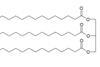
Fatty acids in food supplements
A resource involving the investigation of the chemical composition of some food supplements that contain omega-3 and omega-6 fatty acids.
-
 Resource
Challenging Plants: Introduction/Pedagogical Overview
Plants have the potential to help us to meet many of the challenges facing Earth and its inhabitants. This PowerPoint presentation introduces the uses of plants and summarises some of the underpinning chemical principles, concepts and ideas.
-
 The Mole
Trade secrets... Bio or non-bio washing powder?
Secrets of the trade: Jonathan Hare looks at the science of getting your clothes clean
-
 Resource
On This Day - Oct 26 : Arthur Kornberg died
He shared the 1959 Nobel Prize in Physiology or Medicine for discovering the mechanism of how deoxyribonucleic acid (DNA) replicates in biological systems, and many of the enzymes and building blocks required along the pathway. These findings were fundamental to our understanding of genetics.
-
 Resource
On This Day – Jul 25 : Rosalind Franklin was born
She carried out crucial x-ray crystallography experiments at King’s College London that helped Crick and Watson determine the structure of DNA. She also led pioneering work on the tobacco mosaic and polio viruses.
-
 Resource
On This Day - Apr 12 : Otto Meyerhoff was born
He was awarded half the Nobel Prize in Medicine in 1922 for describing the way muscle tissue absorbs oxygen (O2) and converts it to lactic acid. He also discovered that glycogen is converted into lactic acid when the muscle contracts.
-
 The Mole
Sniffing out an explanation
It’s strange to think that no one knows exactly how smell works. Josh Howgego explains the chemistry behind the puzzle
-
 Resource
On This Day - Apr 08 : Melvin Calvin was born
He is most famed for discovering the Calvin cycle, the pathway for carbon dioxide (CO2) assimilation in plants. He was awarded the Nobel Prize in Chemistry in 1961 for this work.
-
 Resource
On This Day - Apr 04 : Synthesis of Vitamin B6
Merck, Sharp and Dohme were the first to artificially synthesise Vitamin B6, which is required for good health. It has a role in the production of haemoglobin – the molecule that carries oxygen (O2) around our bodies – and regulates blood sugar levels. Related resources: Haemoglobin podcast