









All Compounds and mixtures articles
-
 Resource
Gases in the air | Johnstone’s triangle | 11–14 years
Think about the mixture of elements and compounds in air at three conceptual levels
-
 Resource
Elements, compounds and mixtures | Developing understanding | 11–14 years
Secure your learners’ understanding of how elements and compounds are represented in particle diagrams
-
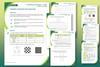 Resource
Properties of elements and compounds | Developing understanding | 11–14 years
Encourage learners to think more deeply about why a compound does not have the same properties as its constituent elements
-
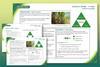 Resource
Bioethanol | Johnstone’s triangle | 11–14 years
Connect understanding about the macroscopic properties of elements and compounds at a sub-microscopic and symbolic level
-
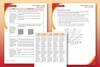 Resource
Solubility | Structure strip | 14–16 years
Use scaffolded prompts to support learners to write about solubility with confidence
-
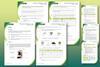 Resource
Filtration | Developing understanding | 11–14 years
Support learners to develop secure mental models of how filtration can be used to separate mixtures
-
 Resource
Filtering muddy water | Johnstone’s triangle | 11–14 years
Use Johnstone’s triangle to explain how filtration can be used to separate mixtures
-
 Resource
Representing elements and compounds | Structure strip | 14–16 years
Use scaffolded prompts to support learners to write about representing elements and compounds with confidence
-
 Resource
Chromatography | Structure strip | 14–16 years
Use scaffolded prompts to support learners to write about chromatography with confidence
-
 Resource
Separating mixtures | Structure strip | 11–14 years
Use scaffolded prompts to support learners to write about separating mixtures with confidence
-
 Resource
Symbols and formulas | Structure strip | 11–14 years
Use scaffolded prompts to support learners to write about symbols and formulas with confidence
-
 Resource
Atoms and molecules | Structure strip | 11–14 years
Use scaffolded prompts to support learners to write about atoms and molecules with confidence
-
 Resource
Properties of elements and compounds | Structure strip | 11–14 years
Develop writing skills and recall with these scaffolded prompts about the physical properties of elements and compounds
-
 Resource
The reaction between zinc powder and sulfur
A spectacular practical demonstration to show the differences between elements, mixtures and compounds
-
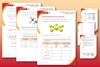 Resource
Representing elements and compounds | Knowledge check | 14–16
Assess understanding of representing elements and compounds with a higher and foundation worksheet
-
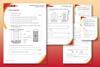 Resource
Chromatography | Knowledge check | 14–16
Assess learning of paper chromatography with a higher and foundation worksheet
-
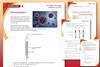 Resource
Chromatography and developing vaccines | In context | 14–16
Put chromatography into context with questions based on vaccine development
-
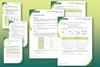 Resource
Symbols and formulas | Developing understanding | 11–14 years
Develop your learners’ understanding of what is represented by symbols and chemical formulas
-
 Article
What was the first paint colour?
Uncover the colourful (and deadly) chemistry of paint, from the Stone Age to today
-
 Resource
Reactant and product substances | Developing understanding | 11–14
Use these worksheets to secure and deepen your learners’ understanding of reactants and products in chemical changes