









All Reactions and synthesis articles – Page 4
-
-
 CPD article
Applying practical knowledge to unfamiliar contexts
Prepare students to use their learning in different situations
-

-
 Exhibition chemistry
The glow stick reaction
Light up the classroom with this simple, safe and value-for-money demonstration of chemiluminescence
-
 Resource
Inorganics in aqueous solution 16–18
Test your students familiarity with acid base chemistry and ligand substitution reactions with this Starter for ten worksheet of questions about inorganics in aqueous solution.
-
 Resource
Periodicity 16–18
Reinforce ideas about period 3 oxides, their reactions and their structure and bonding with these Starter for ten activities.
-
 Resource
Organic synthesis 16–18
Challenge your students to recall the reagents, conditions and mechanism for various organic transformations to answer these Starter for ten questions.
-
 Resource
Polymers 16–18
Put your students’ knowledge of polymer theory to the test with these Starters for ten questions.
-
 Resource
Compounds with amine groups 16–18
Assess your students’ awareness of compounds with amines groups with a Starter for ten activity covering classifying amines and amides, properties of amines, amino acids among other amine subjects.
-
 Resource
Aromatic chemistry 16–18
Use these Starter for ten questions to challenge your students to name aromatic compounds and recall the structure of benzene and electrophilic substitution mechanisms.
-
 Resource
Carbonyl chemistry 16–18
Consolidate your students’ knowledge of the synthesis and reactions of carbonyl compounds using these Starter for ten questions.
-
 Resource
Organic chemistry starters 16–18
Starter for ten questions covering some of the main aspects of organic chemistry at GCSE and A level, including functional groups, nomenclature, isomerism and mechanisms
-
-
 Resource
Science concept cartoons: exothermic and endothermic reactions
Spark discussion and stimulate thinking about exothermic and endothermic reactions in a way that encourages pupils to share their ideas.
-
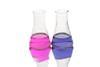 Demonstration
The equilibrium between two coloured cobalt species
In this demonstration the equilibrium between two different coloured cobalt species is disturbed. Le Chatelier’s principle is used to predict a colour change.
-
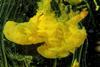 Class experiment
Precipitation reactions of lead nitrate
Compare the colours of various lead compounds to identify which would be good pigments in this microscale practical. Includes kit list and safety instructions.
-
-
 CPD article
Monitoring reactions | Teaching practical science
Encourage your learners to observe and measure reactions effectively
-
 Class experiment
Some reactions of sulfur dioxide
Observe the reactions of sulfur dioxide with potassium manganate (IV), iodide/iodate mixture and indicator solution. Includes kit list and safety instructions.
-
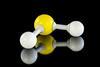 Class experiment
Microscale reactions of hydrogen sulfide
Observe the reactions of hydrogen sulfide with lead nitrate, silver nitrate and potassium manganate(VII) in this microscale practical. Includes kit list and safety instructions.