








All RSC Education articles in September 2008
-
-

-
 Feature
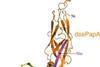
Better than antibiotics?
Chemicals that make bacteria lose their hair could be a new weapon in the fight against infections, and at the same time help to overcome the problem of antibiotic resistance
-
 Feature
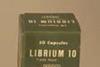
Librium and Valium - anxious times
This year marks the 100th anniversary of the birth of Leo Sternbach, discoverer of the anti-anxiety drugs Librium and Valium
-
-
 News
NewsChanging attitudes
Durham University researchers studied why students lose interest in science as they go through secondary school and why boys favour science more than girls
-
 News
NewsScience Diploma - talks begin
The Science Diploma Development Partnership (SDDP) invites the educational and scientific communities to say what they want from the Government's proposed Science Diploma
-
 News
NewsBill Bryson prize communicators
Primary and secondary school students from across the UK exhibit their talent for communicating science in the RSC Bill Bryson Prize competition
-
 Soundbite
Lactones as biofuel
Simon Cotton takes a look at those compounds that find themselves in the news or relate to our everyday lives.
-
 Opinion
Calcium compounds - like chalk and cheese
Peter Borrows takes us on another excursion into local chemistry
-
 News
NewsSixthformers camp out
New residential camp run at Bristol University offers students who are considering studying for a degree in chemistry in the UK the opportunity to experience being in a chemistry department
-

-
-

-
 News
NewsCognitive conflict
Using a demonstration of strong and weak acids, Australian researchers studied the effectiveness of using cognitive conflict strategy with Year 11 chemistry students
-
 Feature
Deadly things come in small packages
Painstaking work by chemists to characterise deadly alkaloids exuded in the skin of some brightly coloured poison arrow frogs has offered leads for new and useful pharmaceuticals
-
 Exhibition chemistry
Displacement reaction of silver nitrate and copper metal
Watch silver crystals grow in this captivating experiment
-
 Feature
The power of NMR: in two and three dimensions
Over the past 30 years chemists have developed NMR experiments in two and three dimensions that enable them to solve the structure of complex organic compounds
-
-
 News
NewsUK needs 'employable' graduates
RSC responds to the Government's consultation on a strategy to increase the number of 'employable' graduates in the UK and raise the skills of workers