








All Structure and bonding articles – Page 12
-
 Class experiment
Making plastic from potato starch
Explore bioplastics with an experiment making plastic using potato starch. Lab and non-lab versions available
-
 Resource
Chemistry stinks - class smelling activity
This class practical introduces concepts of chemistry and smell. A number of common chemicals with distinctive smells have been chosen to help students get their nose around different functionalities in chemistry. This is done via a series of solutions, which can be smelled using smelling sticks.
-
 Resource
Molymod sets
These popular molecular modelling sets can be used to make many different molecules. This makes them ideal for use by students, educators and researchers. Follow the links below buy the sets in our online shop. If you’re a member of the Royal Society of Chemistry, you’re entitled to a 35% ...
-
 Demonstration
Water expands when it freezes
Use this demonstration to show that water expands when it freezes, showing students how it can break a bottle. Includes kit list and safety instructions.
-
 Resource
Journal articles made easy: Predict crystallinity
This article looks at predicting and controlling the crystallinity of molecular materials. It will help you understand the research the journal article is based on, and how to read and understand journal articles. The research article was originally published in our CrystEngComm journal. Will it crystallise?Predicting crystallinity of molecular materialsClick ...
-
 News
NewsPurely inorganic aromatic ion synthesised
Aromatic anion made from nitrogen and phosphorus synthesised
-
 Class experiment
Hydrogels in plant water storage crystals
Investigate plant water storage crystals as one application of hydrogels in this fun class practical. Includes kit list and safety instructions.
-
 Class experiment
Investigating hydrogels in nappies and hair gel
Investigate hydrogels as polymeric smart materials in this series of activities using nappies and hair gel. Includes kit list and safety instructions.
-
 Resource
Large molecules
The Inspirational chemistry chapter ‘Large molecules’. This chapter suggests games, activities, practicals and demonstrations for teaching various topics, such as polmers, emulsifiers and textile conservation.
-

-
 Exhibition chemistry
Red hot carbon
Declan Fleming shows you how to capture your students’ imaginations with spectacular demonstrations
-
 Resource
Swimming pool chemistry | 16–18 years
Synoptic questions explore structure and bonding, equilibrium and spectrometry and spectroscopy in the context of swimming pools
-
 Resource
Shapes of molecules and ions
This activity draws some extra concepts and mathematical skills into the discussion of molecular shape. A distinction between geometry around the central atom and the shape of the molecule is made.
-
 Resource
Oxidation numbers
This activity introduces oxidation numbers by giving a conceptual foundation for them in terms of electron accounting and polar bonds. It then shows how the model used so far needs refining.
-
 Resource
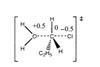
Formal charge
This activity introduces formal charge – a useful tool which otherwise might not be taught. The formal charge model treats bonds as pure covalent, in contrast to the oxidation state model which treats bonds as ionic.
-
 Resource
Covalent bonding
This activity seeks to develop an understanding of covalent bonding in terms of energetic stability rather than full shells.
-
 Resource
Carbon - the element with several identities
The student worksheet includes information about Sir Harry Kroto, one of the team who discovered the third allotrope of carbon, buckminsterfullerene.
-
 Resource
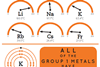
Elements infographics
A collection of visually stimulating and informative infographics about the elements, which would make a valuable addition to any science classroom.
-
 Resource
Education in Chemistry: molymod competition worksheets
We are pleased to announce the winners of the 2013 Education in Chemistry molymod competition. The winning worksheet was designed by Mary Wong, with Catherine Smith and Matthew Standford coming in as runner-ups.
-
 Resource
What is honey made of? The optical rotation of sugars
Discover more about carbohydrates, chirality, optical rotation, in honey. Includes kit list and safety instructions.