









All Misconceptions articles – Page 4
-
 Feature
Improve learning with cognitive science
Cognitive science promises to help us understand the human mind and, crucially for teachers, how it learns. It could improve your day-to-day teaching. Now there’s a thought …
-
 CPD article
Teaching organic chemistry post-16
Introduce the study of molecules containing carbon atoms to your students with these many different contexts
-
 Ideas
IdeasInterpretation and intervention skills: 6 ways to develop your assessment skills
Develop your questioning skills to help students successfully grasp concepts
-
 Feature
Are misconceptions on your RADAAR?
How to use the EEF’s RADAAR framework to help you better consider misconceptions when planning your lessons and curriculums
-
 News
NewsUsing student-generated animations to assess conceptions
Harness the power of PowerPoint when teaching molecular motion to identify misconceptions and help students better understand the sub-microscopic world
-

-
 Ideas
IdeasMistakes, errors and misconceptions: 6 ways to develop your assessment skills
Learn how to use your subject knowledge to avoid learning errors
-
 CPD article
Teaching structure and bonding post-16
Try these tips, contexts and activities to tackle the orbital model of the atom and bonding
-
 Resource
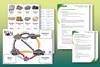
Rock cycle board game
A simple board game to help students avoid the common misconception that there is only one set path through the rock cycle
-
 Ideas
IdeasPut organic chemistry concepts in context
3 ways to teach 14–16 students how to apply their knowledge to new scenarios and prepare them for exams
-
 CPD article
How to teach chemical energetics
Exothermic reactions go beyond simply combustion – use these tips to boost student understanding of energy transfer
-
 News
NewsLearning organic mechanisms – does technology help?
Are chemistry learning applications really worthwhile?
-
 Ideas
IdeasHow to use hinge point questions effectively
They can help both you and your students learn – but what are hinge questions, and when should you ask them?
-
 News
NewsResearch points the way to help teach Maxwell—Boltzmann distributions
How to avoid faulty knowledge application by students when teaching distributions of states
-
 CPD article
Why you should teach the history of the periodic table
Because students familiar with the table’s development and structure make better chemists
-
 News
NewsWhich is best: practical or simulation?
Students interact with practicals and simulations differently, but does one approach come with better learning outcomes?
-

-
 Feature
Uncover your students' preconceptions
Understanding their existing ideas helps avoid misconceptions
-
 Ideas
IdeasAvoid the pitfalls of language
Help students learn the difference between everyday and chemistry vocabulary
-