








All Misconceptions articles
-
 Resource
Interpreting graphs | Maths skills for chemistry
A flexible set of resources, including two full lesson plans, sets of short activities and learner worksheets
-
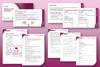 Resource
Algebra and equations | Maths skills for chemistry
A flexible set of resources, including two full lesson plans, sets of short activities and learner worksheets
-
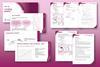 Resource
Creating graphs | Maths skills for chemistry
A flexible set of resources, including two full lesson plans, sets of short activities and learner worksheets
-
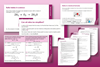 Resource
Ratio and proportion | Maths skills for chemistry
A flexible set of resources, including two full lesson plans, sets of short activities and learner worksheets
-
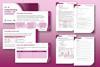 Resource
Understanding number | Maths skills for chemistry
A flexible set of resources covering unit conversion, significant figures and rounding. Includes full lesson plans, short activities and learner worksheets
-
 Ideas
IdeasPinpoint and fix misconceptions
Effectively identify and fix the root of student errors without reteaching the entire topic using this four-step approach as part of concept repair
-
 Misconceptions
Mass and dissolving | Chemical misconceptions II | 11–14 years
Use these questions to explore dissolving solids in liquids and tackle common misconceptions
-
 Exhibition chemistry
Forming a cloud in a bottle
Explore evaporation, condensation and equilibrium with this quick and easy demonstration
-
 Exhibition chemistry
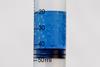
Boiling without heating
Overcome common misconceptions about changes of state and vaporisation with water, a syringe and reduced pressure
-
 Resource
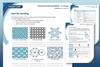
Chemical misconceptions II: Spot the bonding | 16–18 years
This activity explores learners knowledge of different bonding types through 18 diagrams
-
 Misconceptions
Ionic bonding: true or false? | Chemical misconceptions II
Check your learners’ understanding of ionic bonding with this true or false worksheet
-
 CPD article
How to teach aromatic chemistry at post-16
Tips and ideas to enhance your teaching of conjugated pi systems
-
 CPD article
Teaching atom economy, percentage yield and green chemistry post-16
Use these tips and ideas for teaching these quantitative topics
-
 CPD article
Teaching isomerism at post-16
Ensure your students succeed with structural and stereoisomerism
-
 CPD article
Teaching conservation of mass at 14–16
Help learners master the concept of conservation of mass with these hands-on teaching ideas
-
 CPD article
How to teach Maxwell–Boltzmann distribution curves at post-16
Enhance learners’ knowledge and understanding of reaction kinetics and how to interpret graphs
-
 CPD article
Teaching enthalpy cycles at post-16
Use these tips and resources to help your students construct and interpret enthalpy cycles
-
 CPD article
How to teach titration post-16
Tips for teaching practical titration techniques and the underlying theory
-
 CPD article
How to teach polymers at post-16
Teaching strategies and resources to help learners master polymers and overcome misconceptions
-
 News
NewsUnderstanding how students untangle intermolecular forces
Discover how learners use electronegativity to predict the location of dipole−dipole interactions